

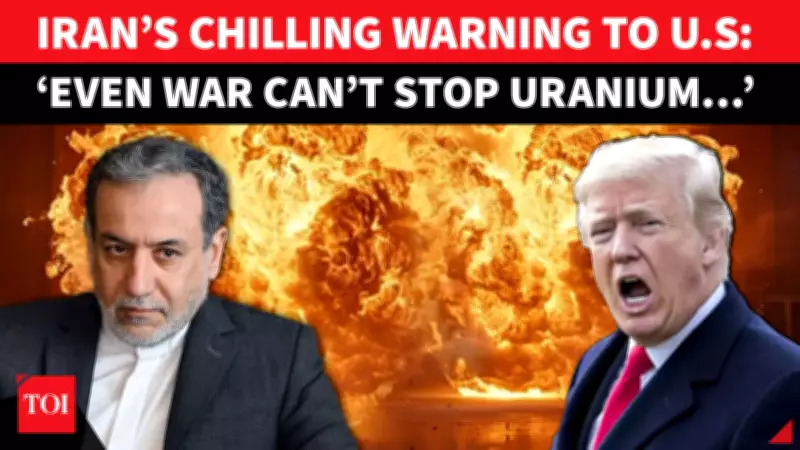
Iran Stands Firm Against U.S. Threats, Rejects Demands on Uranium Enrichment
In a bold and defiant stance, Iran has issued sharp retorts to recent threats from the United States, with Foreign Minister Abbas Araghchi declaring that Tehran is "not afraid" of U.S. military forces. This statement comes as indirect nuclear talks between the two nations in Oman have failed to ease escalating tensions, pushing the longstanding nuclear standoff into a perilous new phase.
Red Line Drawn on Uranium Enrichment
Speaking after the diplomatic discussions, Araghchi emphasized that Iran will never give up its uranium enrichment program, even if war is imposed by external powers. This clear red line underscores Tehran's unwavering commitment to its nuclear ambitions, despite mounting international pressure and a significant U.S. military buildup in the Gulf region. The Foreign Minister's remarks highlight Iran's determination to maintain its sovereign rights, dismissing Washington's warnings as ineffective.
Rising Tensions Over Multiple Fronts
The confrontation is intensifying on several critical issues, including:

- Nuclear Program: Iran's continued uranium enrichment, which the U.S. views as a pathway to nuclear weapons development.
- Ballistic Missiles: Tehran's missile capabilities that pose regional security threats.
- Regional Proxies: Iran's support for militant groups across the Middle East, fueling instability.
- Human Rights Record: Ongoing international criticism of Iran's domestic policies.
With U.S. warships deployed in the area and diplomatic efforts hanging by a thread, the situation is becoming increasingly volatile. The presence of American military assets, such as the USS Abraham Lincoln, serves as a stark reminder of the potential for conflict, even as negotiators attempt to bridge the gap.
A Dangerous Phase in U.S.-Iran Relations
The nuclear standoff between Tehran and Washington is now entering what analysts describe as a dangerously precarious phase. Iran's refusal to back down, coupled with its dismissal of U.S. military might, signals a hardening of positions that could lead to miscalculations or direct confrontation. The international community watches closely, aware that any misstep could trigger broader regional instability, with implications for global security and energy markets.
As both sides dig in, the prospects for a peaceful resolution appear dim, raising concerns about the future of diplomacy in one of the world's most volatile regions.






