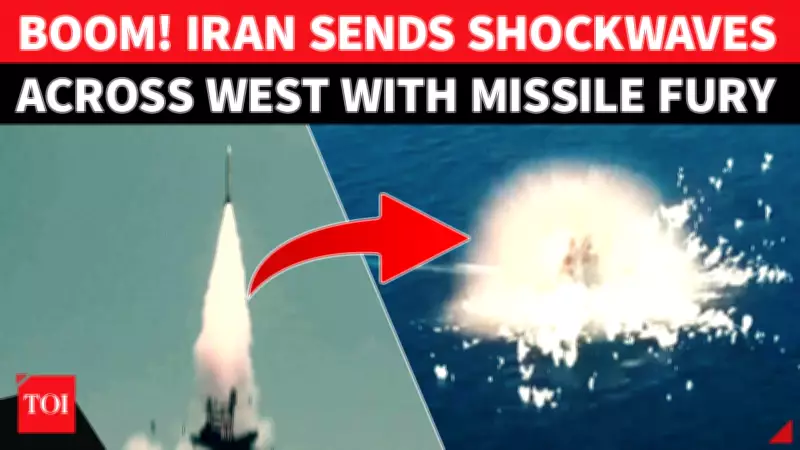
Iran's Strait of Hormuz Military Exercises Ignite Western Concerns and German Warnings
Recent military drills conducted by Iran in the strategically vital Strait of Hormuz have sparked significant alarm across Western nations, with Germany issuing explicit warnings about the potential for escalation in the region. The exercises, viewed as a demonstrative show of strength, coincide with ongoing diplomatic negotiations between the United States and Iran in Geneva, adding a layer of complexity to an already tense geopolitical landscape.
German Defence Minister Highlights "Significant Potential for Tension"
During a visit to special forces in Calw, German Defence Minister Boris Pistorius addressed the situation, stating unequivocally that Iran's actions carry a "significant potential for tension." While he clarified that there is no immediate impact on Germany's military posture or operational readiness, Pistorius emphasized the broader implications of such maneuvers in one of the world's most critical maritime chokepoints.
"The closure and military activities in the Strait of Hormuz represent a clear show of strength by Iran," Pistorius remarked, linking the drills directly to the concurrent US-Iran talks. He underscored that these developments necessitate heightened vigilance and preparedness, as tensions in the region directly affect global shipping lanes through which a substantial portion of the world's oil supply transits.

Strategic Readiness and the "Zeitenwende" Doctrine
Minister Pistorius further contextualized Germany's response by referencing the nation's "Zeitenwende" (turning point) strategic shift, a policy reorientation initiated in response to evolving global security threats. He asserted that in light of such regional provocations, national defense and the security of alliances have once again ascended to the forefront of Germany's defense priorities.
"Our military readiness is paramount," he stated, "especially when key international waterways are involved. The Zeitenwende means we must be prepared to defend our interests and those of our allies robustly." This statement reinforces a broader European and NATO concern regarding stability in the Middle East and the security of energy supplies.
Geopolitical Context and Regional Implications
The Iranian drills in the Strait of Hormuz occur against a backdrop of:
- Ongoing, fragile diplomatic engagements between Washington and Tehran.
- Persistent regional rivalries and proxy conflicts across the Middle East.
- Increased great-power competition influencing maritime security dynamics.
Germany's vocal apprehension reflects a wider Western unease that such military posturing could derail diplomatic efforts or inadvertently trigger a broader confrontation. The Strait of Hormuz, a narrow passage connecting the Persian Gulf with the Gulf of Oman, is a linchpin for global energy markets, making any military activity there a matter of international economic and security concern.
While the immediate German military situation remains unchanged, the political and strategic warnings issued by Berlin signal a proactive stance aimed at deterring further escalation. The international community continues to monitor the situation closely, balancing diplomatic overtures with necessary defense preparedness in an increasingly volatile region.