

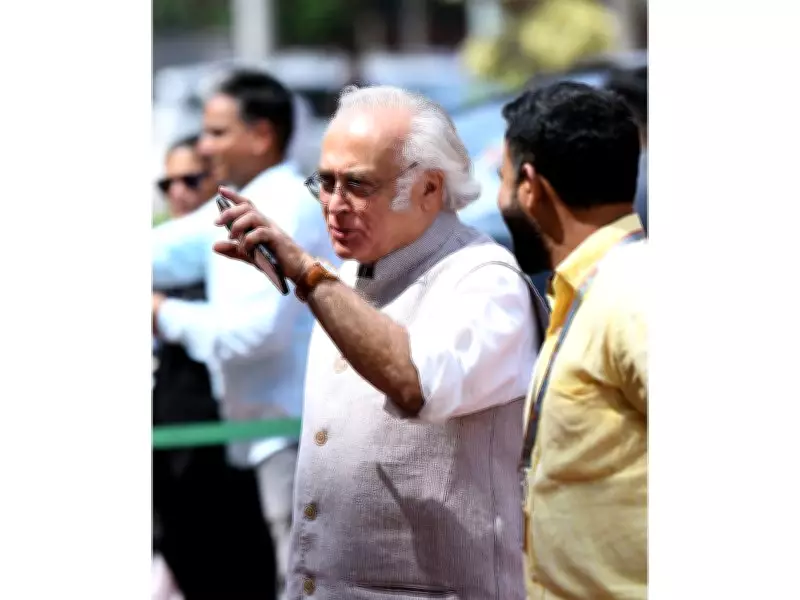
Jairam Ramesh Questions Trump's Claims on Indian Oil Policy
In a sharp rebuke, senior Congress leader Jairam Ramesh has taken aim at former United States President Donald Trump over his recent statements regarding India's oil policy. Ramesh asserted that Trump is overstepping by trying to inform India about its own domestic and international decisions, highlighting a perceived interference in sovereign matters.
Trump's Controversial Remarks
Donald Trump, during a public address, made claims about India's approach to oil procurement and energy strategy. These comments have sparked a diplomatic and political debate, with Ramesh leading the charge in questioning their accuracy and appropriateness. The former US president's remarks touched upon India's reliance on oil imports and its broader economic policies, which Ramesh argues are internal affairs best left to Indian authorities.
Ramesh's Strong Response
Jairam Ramesh, known for his outspoken views on foreign policy, did not mince words in his critique. He emphasized that India, as a sovereign nation, has the right to determine its own energy policies without external dictation. Ramesh pointed out that such statements from foreign leaders, especially former presidents, can undermine bilateral relations and create unnecessary tensions.

Key points from Ramesh's response include:
- Trump's claims are based on misinformation or a lack of understanding of India's complex energy landscape.
- India's oil policy is shaped by domestic needs, global market dynamics, and strategic partnerships, not by external pressure.
- The Congress party stands firm in defending India's autonomy in decision-making processes.
Implications for US-India Relations
This exchange comes at a time when US-India relations are navigating various geopolitical challenges. Ramesh's comments underscore the sensitivity surrounding foreign commentary on India's internal policies. Experts suggest that such incidents could influence diplomatic dialogues, particularly if they are perceived as attempts to sway India's independent stance on critical issues like energy security.
The broader context involves ongoing discussions about global oil markets, climate change commitments, and India's role as a major consumer. Ramesh's stance reflects a growing sentiment among Indian political circles to assert national sovereignty in the face of international opinions.
Political and Public Reaction
Within India, the reaction has been mixed, with some supporting Ramesh's defense of sovereignty, while others view it as a political maneuver ahead of elections. Public discourse has focused on the balance between engaging with global partners and maintaining policy independence. This incident highlights the delicate interplay between diplomacy and domestic politics in shaping India's foreign policy narrative.
As the debate continues, it remains to be seen how this will affect future interactions between Indian leaders and their US counterparts, especially in areas like trade, energy, and strategic alliances.






