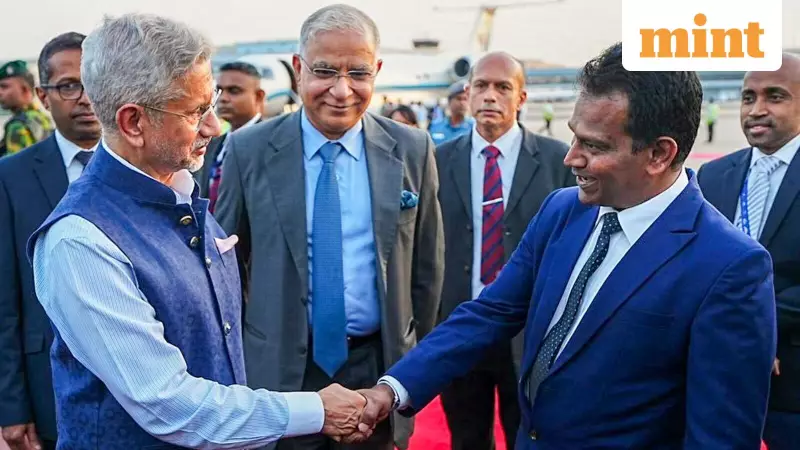
India's External Affairs Minister, Dr. S Jaishankar, arrived in Colombo on Monday evening, embarking on a significant diplomatic mission as the special envoy of Prime Minister Narendra Modi. His visit is strategically timed as Sri Lanka commences large-scale reconstruction efforts in the wake of the devastating Cyclone Ditwah, which struck the island nation in late November.
Solidarity in Crisis: The Agenda of the Visit
The primary objective of the minister's trip is to hold high-level talks with Sri Lanka's top leadership. This engagement underscores India's Neighbourhood First Policy, a cornerstone of its foreign outreach, emphasizing solidarity and immediate support during crises. The discussions are set against the backdrop of Operation Sagar Bandhu, India's comprehensive humanitarian and disaster relief initiative launched on November 28 to address the cyclone's aftermath.
Jaishankar was warmly received upon landing by Sri Lanka's Deputy Tourism Minister, Ruwan Ranasinghe. Taking to social media platform 'X', the minister stated, "Landed in Colombo this evening... Look forward to my meetings with Sri Lankan leadership tomorrow." This visit follows a prior telephonic conversation between PM Modi and Sri Lankan President Anura Kumara Dissanayake, where Modi assured continued Indian assistance and expressed that the people of India "stand in firm solidarity" with their neighbours.

Operation Sagar Bandhu: A Testament to India's Commitment
The scale of India's assistance under Operation Sagar Bandhu has been substantial and multi-faceted, reflecting a deep commitment to Sri Lanka's recovery. The cyclone's fury resulted in over 640 fatalities and caused extensive damage to crops, tea estates, roads, and bridges.
To mitigate this crisis, India has dispatched a massive volume of aid, including:
- Over 1,134 tonnes of humanitarian assistance comprising dry rations, tents, and tarpaulins.
- Essential hygiene kits, clothing, and water purification systems.
- A critical consignment of 14.5 tonnes of medicines and surgical equipment.
The logistical backbone of this operation involved several Indian naval vessels such as INS Vikrant, INS Udaygiri, INS Sukanya, and INS Gharial, which delivered relief materials to the ports of Colombo and Trincomalee. Furthermore, Indian Air Force and Navy helicopters played a crucial role in evacuating survivors, transporting troops, and air-dropping supplies to inaccessible areas.
On-Ground Humanitarian Efforts
Beyond material aid, India deployed specialized human resources to the field. Two dedicated teams from the National Disaster Response Force (NDRF) conducted immediate search and rescue operations in the most affected zones. Perhaps one of the most impactful contributions was an 85-member Indian Army Field Hospital established in Mahiyanganaya, which provided life-saving medical care to more than 7,000 patients, offering a beacon of hope amidst the devastation.
This visit by EAM Jaishankar, therefore, is not merely diplomatic but a reaffirmation of the tangible, life-saving partnership between the two nations. It highlights India's role as the first responder in the region, ready to extend support from emergency rescue to long-term rehabilitation, thereby strengthening the enduring bonds of friendship and cooperation between India and Sri Lanka.