

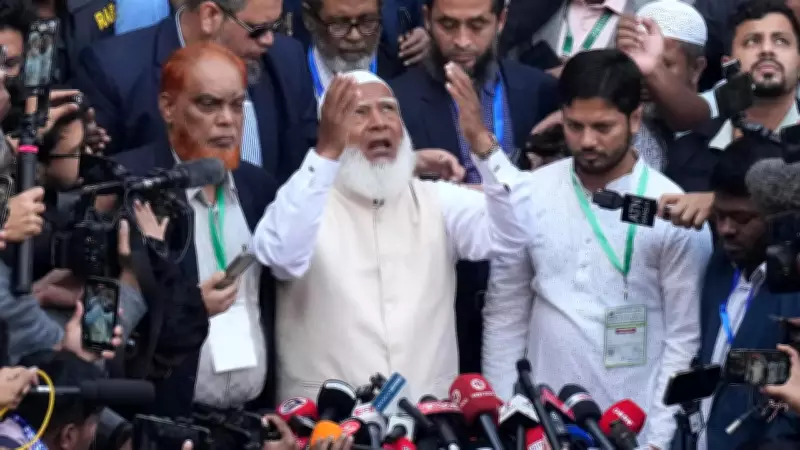
Bangladesh Election Results: Jamaat-e-Islami's Strong Performance Near Indian Border Alarms Authorities
Concerns have significantly intensified following the release of Bangladesh's poll results on Friday, which revealed that the hardline Islamist party Jamaat-e-Islami and its political allies secured a substantial number of victories in constituencies adjacent to India. The group clinched an impressive 68 seats in these border regions, marking its most successful electoral performance in over a quarter of a century. This development has triggered heightened apprehensions regarding regional stability and cross-border security dynamics.
Historical Ties and Ideological Alignments Amplify Risks for India
Jamaat-e-Islami's deep-rooted historical connections and ideological affinity with Pakistan have long been a source of strategic unease for Indian policymakers. The Bharatiya Janata Party (BJP) has explicitly highlighted these perils, pointing to the potential threats posed by the group's resurgence. In the 2021 West Bengal assembly elections, the BJP itself secured more than 16 constituencies that directly border the Bangladeshi areas where Jamaat-e-Islami has now established a formidable presence.
Union Minister Sukanta Majumdar of the BJP articulated these worries, stating, "Bangladesh is a distinct sovereign nation. We anticipate that the newly formed government will uphold law and order and safeguard minority communities from persecution. However, Jamaat's electoral triumphs along the frontier are deeply disquieting. This outcome unequivocally indicates a process of intense radicalization occurring on both sides of the border."

Geographic Spread: Key Border Districts and Western Bangladesh Strongholds
The impact of Jamaat-e-Islami's electoral gains is particularly pronounced in several Indian districts that share boundaries with Bangladesh. These include:
- South 24 Parganas
- North 24 Parganas
- Nadia
- Murshidabad
- Malda
- Alipurduar
On the Bangladeshi side, Jamaat-e-Islami has extended its influence across much of western Bangladesh, with notable strongholds in regions such as Satkhira, Mymensingh, Rajshahi, Rangpur, and Gaibandha. This geographic expansion underscores the group's revitalized organizational capabilities and grassroots outreach efforts.
Political Context: Awami League's Perspective and Historical Trajectory
Functionaries from the exiled former Prime Minister Sheikh Hasina's Awami League have provided insights into Jamaat-e-Islami's recent ascendancy. They noted that the party, which was previously banned, began to systematically spread its influence over the past year. Salim Mahmud, a former Awami League Member of Parliament from Chandpur (1), remarked, "Jamaat-e-Islami is a radical organization that adheres to extremist ideologies, which have never been acceptable to democratic entities like the Awami League. Regrettably, they managed to expand their network during the tenure of the interim government."
Jamaat-e-Islami's electoral journey has been marked by significant fluctuations:
- In the 2001 election, the party secured 17 parliamentary seats.
- By 2008, its representation dwindled to merely two seats.
- In 2013, Bangladesh's Supreme Court cancelled Jamaat-e-Islami's registration, dealing a major blow to its legal status.
While Sheikh Hasina's government imposed a ban on the group, the interim administration lifted this prohibition in 2024, facilitating its return to the political arena. This reversal has enabled Jamaat-e-Islami to re-enter electoral politics and achieve its current successes, raising questions about future governance and security protocols in the region.






