

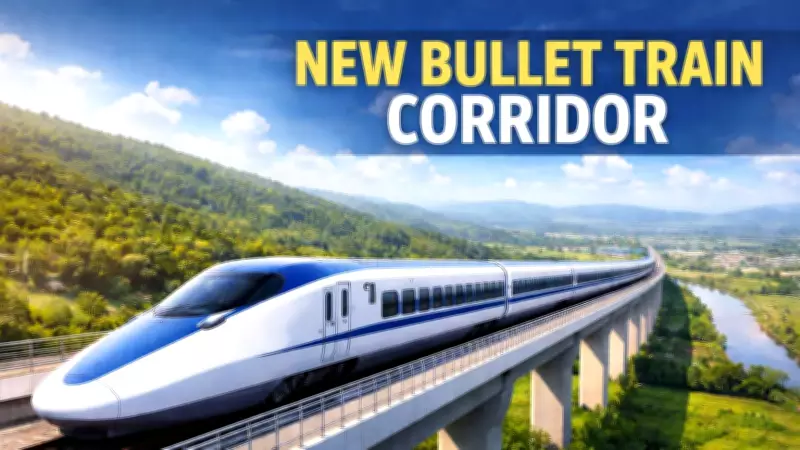
Karnataka's Push for a Third Bullet Train Corridor Gains Momentum
In the wake of the Union Budget 2026-27, which earmarked two major bullet train projects for Karnataka, state authorities are now advocating for a third high-speed rail corridor. The proposed route would link Bengaluru, India's technology hub, with Mumbai, the nation's economic capital, aiming to enhance connectivity and drive regional development.
Union Budget Announcements and Karnataka's Existing Projects
The central government's budget for 2026-27 included the announcement of seven new bullet train corridors across India, with two specifically benefiting Karnataka: the Bengaluru-Hyderabad and Bengaluru-Chennai routes. These projects are set to revolutionize travel times, with the Bengaluru-Hyderabad corridor expected to reduce journey duration to just two hours, and the Bengaluru-Chennai route cutting it to approximately 73 minutes.
However, Karnataka's Commerce and Industries Minister, MB Patil, has highlighted a significant limitation. In a letter to Railway Minister Ashwini Vaishnaw dated February 3, 2026, Patil noted that the stretches of these corridors within Karnataka are limited to around 100 kilometers each. This, he argued, restricts the overall benefits for the state's residents, prompting the call for an additional corridor.

The Proposal for a Bengaluru-Mumbai Bullet Train Corridor
Minister Patil formally submitted a request to Railway Minister Ashwini Vaishnaw during a meeting on February 7, 2026, seeking a high-speed rail link between Bengaluru and Mumbai. In a post on social media platform X, Patil emphasized the strategic importance of connecting these two key cities, stating, "Bengaluru is the technology capital of the country, and Mumbai is the economic capital. It is imperative to connect these two cities with the best connectivity system."
The proposal suggests extending the already announced high-speed rail corridor between Mumbai and Pune to include Bengaluru. Patil reported that the Railway Minister responded positively to this idea, indicating potential feasibility for the project.
Potential Benefits and Strategic Alignment
In his detailed letter, Patil outlined several advantages of the proposed Bengaluru-Mumbai corridor:
- Enhanced Regional Connectivity: Aligning the route through central and northern Karnataka would provide rapid access to currently under-connected regions, fostering economic growth and social development.
- Cross-State Benefits: The corridor would extend substantially within Maharashtra as well, offering mutual economic and social benefits for both states.
- Increased Utility: Connecting the existing Mumbai-Pune bullet train project to Bengaluru would significantly boost its strategic importance and utility, creating a seamless high-speed network.
Patil respectfully requested that the feasibility of this corridor be considered, underscoring its potential to deliver wider and more meaningful benefits to the people of Karnataka.
Context of India's Bullet Train Expansion
The demand for the Bengaluru-Mumbai corridor comes amid a broader push for high-speed rail in India. The Union Budget 2026-27's announcement of seven new corridors is expected to attract investments worth Rs 16 lakh crore, transforming train travel across the country. This expansion aligns with ongoing projects like the Mumbai-Ahmedabad bullet train, which is advancing towards electrification, and plans for multi-modal integration of bullet train stations with local trains and metro systems.
As Karnataka positions itself at the forefront of this infrastructure revolution, the state's advocacy for a third bullet train corridor reflects a strategic vision to leverage high-speed rail for regional development and national connectivity.






