

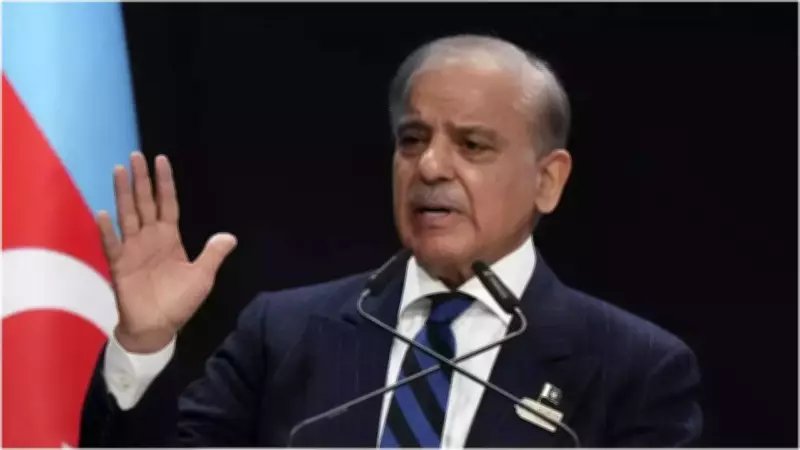
Pakistan Prime Minister Shehbaz Sharif announced on Friday that a Pakistani delegation would attend the funeral of Iranian Supreme Leader Ayatollah Ali Khamenei, who was killed in US-Israeli strikes in February. Speaking in the National Assembly, Sharif revealed a telephone conversation with Iranian President Masoud Pezeshkian on Thursday evening, during which Pezeshkian repeatedly thanked Pakistan for its support and invited Sharif to the funeral scheduled for July 3 and 4.
"I said, Pakistan's delegation will be present there, so we can tell the world how much respect we have for him in our hearts," Sharif told lawmakers. He also highlighted Islamabad's role in facilitating the peace agreement between the United States and Iran. "From Japan to Saudi Arabia, from Kuala Lumpur to Casablanca and from Mexico to India, if any country's name is reverberating with respect and honour, it is Pakistan," he said.
Sharif credited Army Chief Asim Munir with playing the "most significant role" in securing the agreement and acknowledged contributions from Deputy Prime Minister Ishaq Dar and Interior Minister Mohsin Naqvi. He also announced a substantial cut in fuel prices. The National Assembly passed a resolution commending Pakistan's mediation efforts.

Meanwhile, Sharif postponed his visit to Switzerland for the US-Iran peace deal ceremony after the two sides signed a Memorandum of Understanding (MoU) digitally. His spokesperson, Mosharraf Zaidi, told AFP: "The proposed visit has been postponed as the Islamabad Memorandum of Understanding has already been electronically signed, has entered into force, and is now under implementation." The signing was scheduled at the Bürgenstock resort in central Switzerland.
Earlier, Sharif posted on social media that the agreement would take immediate effect. "As a first step, the Islamic Republic of Iran will instantly reopen the Strait of Hormuz and the United States of America will immediately lift the naval blockade," he wrote. The Strait of Hormuz has been under a virtual Iranian blockade since early March, following the February 28 US-Israeli strikes that triggered the Middle East conflict. In response, Washington imposed a naval blockade on Iran in April.






