

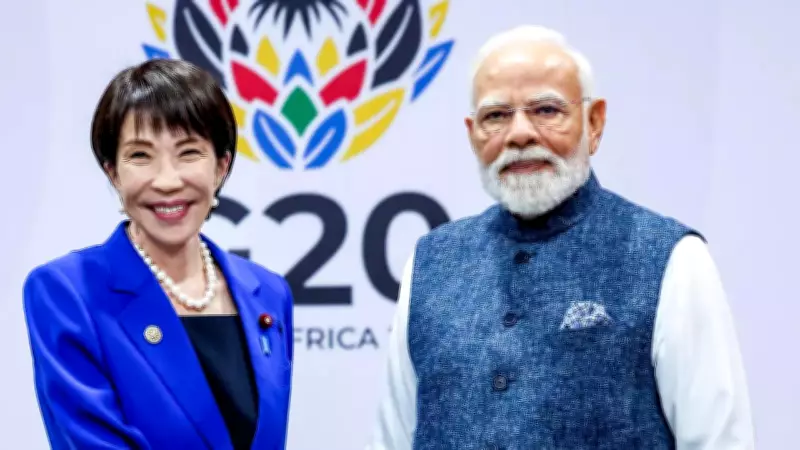
PM Modi Extends Congratulations to Japan's PM Sanae Takaichi on Election Triumph
Prime Minister Narendra Modi on Sunday extended his warm congratulations to Japanese Prime Minister Sanae Takaichi following her landmark victory in the elections to Japan's House of Representatives. In his message, PM Modi expressed strong confidence that the bilateral ties between India and Japan would further deepen and strengthen under her capable leadership.
Strengthening Strategic Partnership
Congratulating Prime Minister Takaichi on the electoral outcome, PM Modi emphasized the crucial importance of India-Japan relations, which are firmly anchored in a Special Strategic and Global Partnership. He highlighted how this partnership plays a pivotal role in maintaining regional and global stability, contributing significantly to international peace and prosperity.
In a post on social media platform X, PM Modi wrote: "Congratulations Sanae Takaichi on your landmark victory in the elections to the House of Representatives. Our Special Strategic and Global Partnership plays a vital role in enhancing global peace, stability and prosperity. I am confident that under your able leadership, we will continue to take the India-Japan friendship to greater heights."

Takaichi's Decisive Mandate
Prime Minister Sanae Takaichi secured a sweeping mandate in the snap lower house elections, consolidating her political position just months after making history as Japan's first woman prime minister. Her ruling Liberal Democratic Party (LDP), along with coalition partners, is expected to command a strong two-thirds majority in the parliament.
This decisive electoral outcome provides the Takaichi government with a substantial legislative advantage, enabling it to push forward its policy agenda with greater authority and effectiveness. The victory represents a significant political turnaround for the LDP, which had faced years of political turbulence characterized by economic challenges, funding scandals, and growing voter discontent.
Profile of Japan's First Woman Prime Minister
Sanae Takaichi, 64, emerged as Japan's prime minister in October after winning the leadership of the Liberal Democratic Party, becoming the country's first woman to hold the prestigious office. Known for her firm stance on defense matters, economic security, and China policy, she has positioned herself as a strong advocate for closer cooperation with the United States and like-minded partners across the Indo-Pacific region.
Key aspects of Takaichi's political profile include:
- First woman prime minister in Japan's history
- Strong advocate for increased defense spending
- Proponent of economic stimulus measures
- Advocate for assertive foreign policy in Indo-Pacific
- Supporter of closer ties with United States and democratic partners
Implications for Policy Direction
The decisive electoral mandate is expected to grant Prime Minister Takaichi enhanced authority to pursue comprehensive policy reforms across multiple domains. Her government is likely to focus on several key areas including increased defense spending, implementation of economic stimulus measures, and the advancement of a more assertive foreign policy framework.
This political development holds particular significance for India-Japan relations, as both nations continue to strengthen their strategic partnership in the face of evolving regional dynamics. The reinforcement of Takaichi's leadership position creates opportunities for enhanced cooperation between the two democracies across defense, economic, and diplomatic spheres.
The electoral outcome also signals potential shifts in Japan's approach to regional security architecture and economic partnerships, with implications for the broader Indo-Pacific strategic landscape. As both India and Japan navigate complex geopolitical challenges, the strengthened leadership position of Prime Minister Takaichi provides a stable foundation for advancing bilateral cooperation and addressing shared regional concerns.






