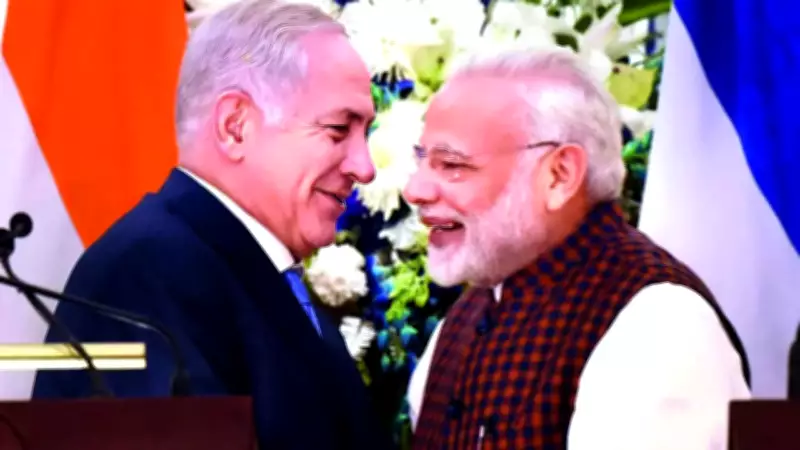
PM Modi's Strategic Israel Visit Aims to Deepen Bilateral Ties
The Indian government officially announced on Tuesday that Prime Minister Narendra Modi will undertake a significant two-day visit to Israel, commencing on Wednesday. This high-level diplomatic engagement is poised to reaffirm the deep and long-standing strategic partnership between the two nations. It presents a crucial opportunity to review common challenges and realign efforts toward achieving a shared vision for a robust partnership between two resilient democracies.
Detailed Itinerary and Key Engagements
Upon his arrival on Wednesday, Prime Minister Modi will engage in an informal meeting with his Israeli counterpart, Benjamin Netanyahu. Shortly thereafter, he is scheduled to address the Israeli Parliament, known as the Knesset, marking a notable moment in bilateral relations. Later in the evening, Modi will visit a technology and innovation exhibition, highlighting the collaborative potential in cutting-edge sectors. The day will conclude with a private dinner hosted by Prime Minister Netanyahu for his Indian guest.
On Thursday, the visit will feature delegation-level talks between the two leaders. These discussions are expected to cover a wide array of cooperative areas, including science and technology, innovation, defence and security, agriculture, water management, trade and economy, and people-to-people exchanges. Additionally, the leaders will exchange perspectives on regional and global issues of mutual interest, reflecting the comprehensive nature of their dialogue.

Major Outcomes and Strategic Agreements
An upgraded security pact stands out as one of the likely major takeaways from this visit, which marks Modi's second trip to Israel. This enhancement aims to deepen defence relationships by updating existing security agreements, enabling both countries to engage in more sensitive projects and develop logical solutions to emerging threats. In parallel, India and Israel are actively working toward signing a free trade agreement later this year, a move that would significantly boost economic ties.
In a statement, the Indian government emphasized that the two leaders will review the significant progress made in the India-Israel Strategic Partnership. They will explore further opportunities across various domains, underscoring the dynamic and evolving nature of their collaboration. This visit is strategically timed amid Israel-US tensions and US threats of military action against Tehran, adding a layer of geopolitical significance to the discussions.
Additional Engagements and Diplomatic Context
During his stay, Prime Minister Modi will also call on Israeli President Isaac Herzog and visit Yad Vashem, the World Holocaust Remembrance Center. These engagements highlight the cultural and historical dimensions of the bilateral relationship. The announcement of Modi's visit came only on the evening before his scheduled departure to Tel Aviv, underscoring the careful planning and sensitivity surrounding the trip.
Ahead of the visit, Israel's ambassador to India, Reuven Azar, expressed optimism about the expected progress. He noted that significant advancements are anticipated in areas such as security, defence, and trade. Azar highlighted the strong cooperation between the two countries over the years but stressed the need to adapt to a rapidly changing world with evolving threats. He also pointed to the momentum in their economic partnership, citing the recent signing of a bilateral investment treaty and ongoing efforts to finalize a free trade agreement.
This visit not only reinforces the strategic alignment between India and Israel but also sets the stage for enhanced collaboration in critical sectors, positioning both nations to better address global challenges and capitalize on mutual opportunities.