

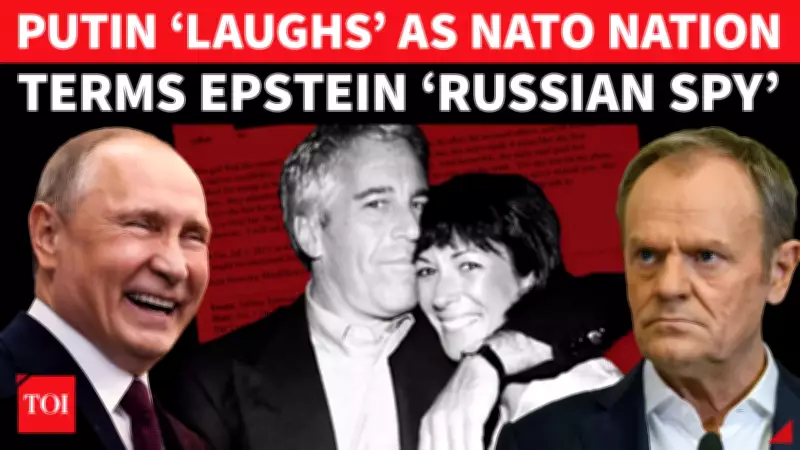
Putin 'Laughs' As NATO Nation Poland Investigates Epstein-Russia Spy Links
Fresh revelations from the newly released Jeffrey Epstein files have sent shockwaves across Europe and Russia, reigniting geopolitical tensions and raising serious national security concerns. As Poland, a key NATO member, launches an urgent national security review into possible "Russian threads" connected to Epstein's global network, the Kremlin has responded with public dismissal and apparent amusement.
Poland's Security Review and Russian Dismissal
The Polish government has initiated a comprehensive security assessment following disclosures in the Epstein documents that suggest potential connections between the convicted sex offender's operations and Russian intelligence networks. This review specifically examines references to Russia, Eastern European connections, and alleged recruitment patterns involving young women that are now under intense scrutiny.
Meanwhile, Russian officials have categorically denied any association between Epstein and their intelligence services. Kremlin spokespersons have publicly laughed off the allegations, characterizing them as baseless Western propaganda designed to smear Russia's international reputation. This dismissive response has created a stark contrast between Warsaw's serious investigation and Moscow's apparent amusement.

Why Moscow Laughs and Warsaw Alarms
Analysts suggest Moscow's laughter stems from multiple factors. First, Russian authorities view the Epstein-Russia spy allegations as another in a long line of unsubstantiated claims from Western nations. Second, the timing coincides with broader geopolitical tensions, allowing Russia to portray NATO countries as engaging in conspiracy theories rather than substantive diplomacy.
Conversely, Poland's alarm reflects genuine security concerns. As a frontline NATO state bordering Russia, Warsaw takes any potential intelligence penetration seriously. The Epstein network's global reach and mysterious funding sources have raised legitimate questions about whether hostile foreign powers might have exploited his operations for intelligence gathering or influence peddling.
The Widening Epstein Scandal Years After Death
Years after Jeffrey Epstein's death in prison, his scandal continues to expand in unexpected directions. What began as a sexual abuse case has evolved into a multinational investigation touching intelligence agencies, political elites, and now international relations. The latest developments demonstrate how Epstein's network potentially intersected with state-level operations, creating new dimensions to an already complex case.
The Eastern European connections mentioned in the files have particular significance given the region's geopolitical importance. Recruitment patterns allegedly involving young women from this area suggest possible exploitation routes that intelligence services might have monitored or utilized.
Regional Implications and Future Developments
This development occurs against a backdrop of heightened Russia-NATO tensions, making Poland's security review particularly sensitive. Other Eastern European nations may follow Warsaw's lead in examining potential Epstein connections within their borders, potentially creating a coordinated regional response.
The Kremlin's laughter may prove premature if Poland's investigation uncovers substantive evidence. However, the burden of proof remains high, and Russian officials seem confident their dismissal will withstand scrutiny. As the Epstein files continue to be analyzed, this story represents another chapter in the ongoing geopolitical struggle between Russia and Western alliances.
What began as a criminal case has transformed into a diplomatic issue with implications for intelligence community assessments, bilateral relations, and public perception of government transparency on both sides of the geopolitical divide.






