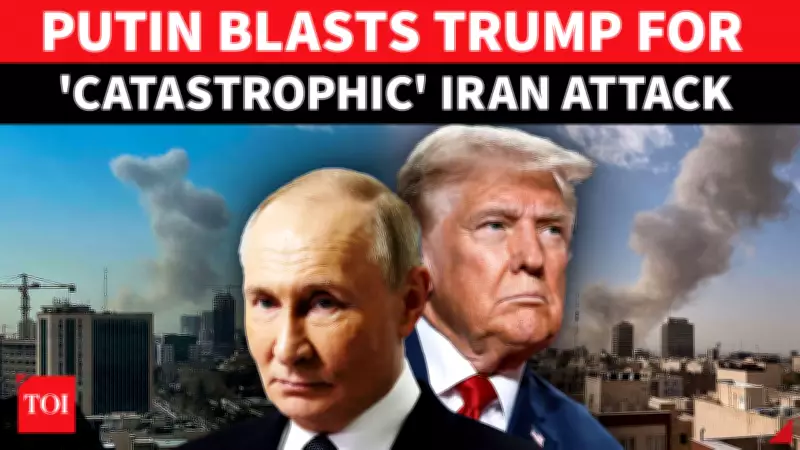
Putin's Russia Backs Iran, Condemns US-Israel Strikes as 'Radiological Catastrophe'
In a fiery statement that has escalated diplomatic tensions, the Russian foreign ministry has strongly condemned recent military strikes by the United States and Israel on Iran. The ministry labeled the actions as a "pre-planned and unprovoked act of armed aggression against a sovereign and independent U.N. member state." This condemnation was issued via a Telegram post, directly challenging the motives of Washington D.C. and Tel Aviv.
Accusations of Hidden Agendas and Regime Change
The Russian statement accused the US and Israel of "hiding behind" concerns over Iran's nuclear program while allegedly pursuing a broader agenda of regime change. This accusation suggests that Moscow views the strikes as part of a strategic effort to destabilize Iran's government, rather than a response to specific security threats. The ministry's language underscores a deepening rift between Russia and Western powers over Middle East policies.
By framing the conflict in these terms, Russia positions itself as a defender of Iranian sovereignty, potentially strengthening its alliance with Tehran amid ongoing global disputes. The statement reflects Moscow's consistent support for Iran in international forums, often countering US-led initiatives.

Context of Escalating Middle East Tensions
This condemnation comes against a backdrop of heightened violence in the region, with reports of missile attacks and military mobilizations involving multiple Gulf states. Recent incidents include:
- Missile bombardments affecting five Gulf states, with Saudi Arabia expressing outrage.
- Iranian strikes on American naval bases in Bahrain, where air defenses reportedly failed to intercept incoming missiles.
- Explosions in Tehran linked to aerial strikes by Israel and the US.
- Increased US airpower and naval forces gathering in the area, signaling potential escalation.
These events have raised fears of a broader conflict, with implications for global security and energy markets. Russia's vocal support for Iran adds a geopolitical dimension, as it aligns with Moscow's efforts to counter US influence in the Middle East.
Broader Implications and International Reactions
The Russian statement also indirectly references former US President Donald Trump, though details are sparse in the original article. It hints at Trump's warnings and actions, such as alerts about Cuba, which may relate to broader US foreign policy under his administration. Additionally, NATO states have issued emergency exit orders from Iran, suggesting a coordinated Western response to the crisis.
This situation highlights the complex interplay of nuclear concerns, regional alliances, and great-power competition. As tensions simmer, the risk of miscalculation or further escalation remains high, with Russia's stance potentially emboldening Iran and complicating diplomatic efforts.
In summary, Russia's condemnation of US-Israel strikes on Iran marks a significant moment in international relations, emphasizing Moscow's role as a key player in Middle East dynamics and its willingness to challenge Western actions head-on.