Putin's Nuclear Declaration Sends Shockwaves Through West
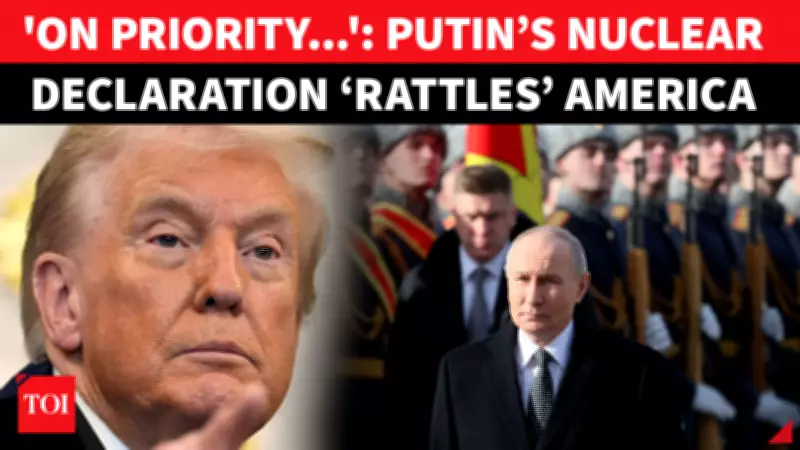
In a stark address on Defender of the Fatherland Day, Russian President Vladimir Putin delivered a chilling message to the international community, declaring that bolstering Russia's nuclear triad remains an absolute priority for Moscow. This announcement has sent alarm bells ringing across the United States and Europe, coming at a critical juncture just after the expiration of the New START Treaty.
The End of an Era: New START Treaty Expires
The New START Treaty, which was originally signed in 2010 between Russia and the United States, served as the last major nuclear arms control agreement between the two superpowers. This landmark treaty imposed strict limits on:
- Deployed strategic nuclear warheads
- Delivery systems including intercontinental ballistic missiles
- Heavy bombers equipped for nuclear armaments
Perhaps most significantly, the treaty mandated comprehensive on-site inspections and verification measures to ensure compliance. With these caps and verification protocols now no longer in force, the global nuclear framework has entered what analysts describe as a period of profound uncertainty.

Moscow's Position and Future Implications
While Putin's declaration has raised concerns about nuclear escalation, Moscow has simultaneously indicated it will not be the first to escalate tensions, provided Washington demonstrates similar restraint. This conditional approach places the future of bilateral arms control squarely in the realm of reciprocity.
The strategic landscape now hinges on several critical factors:
- How the United States responds to Russia's nuclear posture
- Broader geopolitical developments in regions like Ukraine and Eastern Europe
- The potential for new arms control negotiations in a post-New START environment
Defense analysts note that Putin's emphasis on the nuclear triad—comprising land-based missiles, submarine-launched ballistic missiles, and strategic bombers—signals Moscow's continued commitment to maintaining a robust deterrent capability despite economic challenges and international sanctions.
Global Reactions and Strategic Calculations
The timing of Putin's announcement, coinciding with Defender of the Fatherland Day—a holiday honoring Russian military personnel—appears calculated to reinforce national pride while sending a clear message to adversaries. European security officials have expressed particular concern about the vacuum created by the New START Treaty's expiration, noting that without verification mechanisms, transparency in nuclear arsenals diminishes significantly.
Washington faces complex decisions about how to approach future arms control discussions while maintaining strategic stability. The Biden administration must balance deterrence with diplomacy, particularly as other nuclear powers like China continue to modernize their own arsenals.
As the world watches this unfolding strategic drama, the fundamental question remains: Can a new framework for nuclear arms control emerge from this period of uncertainty, or are we entering a new era of nuclear competition reminiscent of Cold War tensions? The answers will shape global security for decades to come.