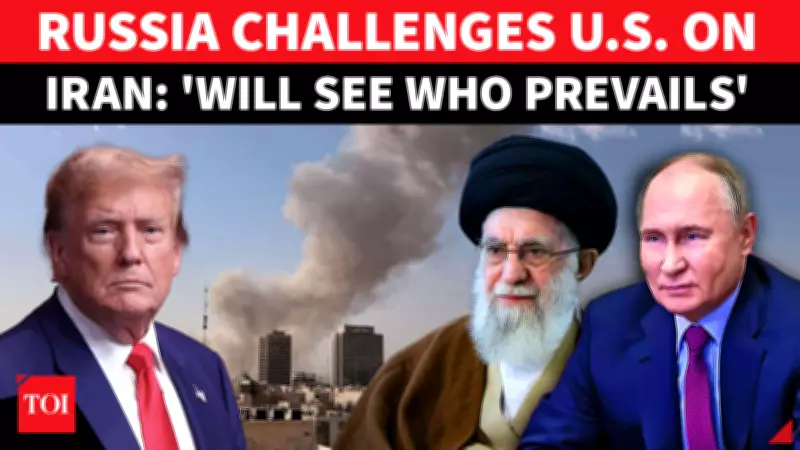
Russia Issues Stern Warning Following US-Israel Military Strikes on Iran
Russia has delivered a sharp and critical response in the wake of recent joint military strikes by the United States and Israel targeting Iran. The remarks, made by a high-ranking Russian official, have introduced a new and volatile geopolitical dimension to the already escalating confrontation in the Middle East.
Medvedev's Direct Critique of US Policy and Diplomacy
Dmitry Medvedev, the deputy chairman of Russia's Security Council and a close ally of President Vladimir Putin, publicly condemned the military operation. He went further to dismiss recent diplomatic engagements with Tehran as nothing more than a superficial "cover" for aggressive actions.
In a pointed address, Medvedev took direct aim at U.S. President Donald Trump, explicitly questioning Washington's long-term strategic resolve in the region. He framed his criticism by drawing a stark contrast between America's relatively short history and the ancient, enduring civilization of Persia, implicitly challenging the sustainability of U.S. foreign policy.

Escalating Tensions and Broader Strategic Objectives
This fiery exchange occurs against a backdrop where President Trump has signaled that the campaign's objectives may extend beyond immediate military retaliation. There are indications that the broader goal could involve pushing for significant political change within the Iranian government itself, adding a layer of regime pressure to the conflict.
The Russian warning serves to complicate an already tense international landscape. It positions Moscow as a critical voice opposing Western military interventions and underscores the deep divisions among global powers regarding the appropriate response to Iranian activities and regional stability.
Analysis of the Geopolitical Stakes
The situation highlights several critical factors:
- Russia's Strategic Posture: Moscow is asserting its influence and aligning its rhetoric against U.S.-led actions, potentially bolstering its partnerships with nations opposed to Western intervention.
- Questioning American Commitment: Medvedev's comments directly challenge the perception of steadfast U.S. leadership, aiming to sow doubt among allies and adversaries alike about Washington's endurance in prolonged conflicts.
- Diplomatic Fallout: The characterization of diplomacy as a "cover" undermines trust in negotiation processes and suggests a preference for confrontational approaches over dialogue.
- Regional Destabilization: The combination of military strikes and heightened rhetorical exchanges significantly increases the risk of a broader regional conflict, drawing in multiple state and non-state actors.
This development marks a significant escalation in diplomatic rhetoric, transforming the Iran conflict into a proxy for larger great-power rivalries. The international community now watches closely as verbal warnings and military posturing threaten to push the Middle East toward a more dangerous and unpredictable phase.