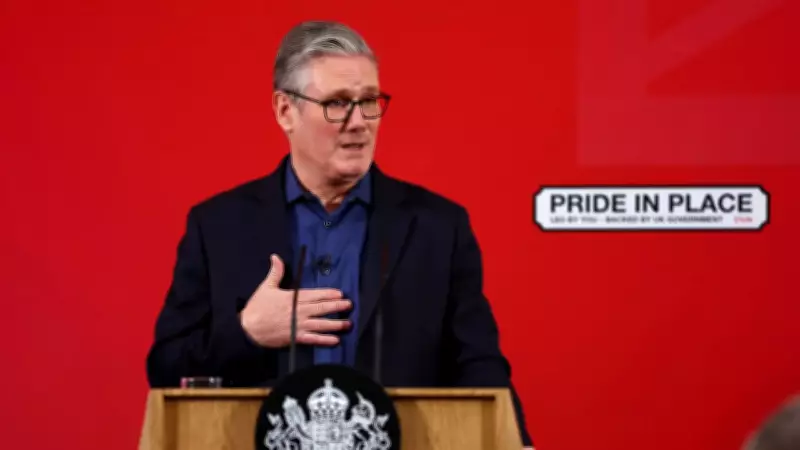
UK Prime Minister Keir Starmer Defends West Asia Policy Amid Trump's Criticism
British Prime Minister Keir Starmer has firmly defended his government's actions in West Asia, responding to sharp criticism from former US President Donald Trump regarding the United Kingdom's reluctance to join military strikes against Iran. In a parliamentary address on Monday, Starmer emphasized that his decisions are strictly guided by legal considerations and the overarching national interest of the UK.
Trump's Critique of UK's Delayed Response
Earlier, in an interview published by the Daily Telegraph, Donald Trump expressed his dissatisfaction with Britain's approach. He remarked that the UK had taken an excessively long time to permit Washington to utilize its military bases for operations targeting Iran. Trump specifically noted that Starmer seemed overly concerned with the legality of such strikes, a stance he described as unprecedented in the historical relationship between the two nations.
Starmer's Justification for Limited Military Support
In his detailed response to parliament, Prime Minister Starmer clarified the rationale behind his government's measured actions. He explained that he authorized the limited use of British military bases by the United States on Sunday. This decision came in direct response to what he termed reckless attacks by Iranian drones and missiles that targeted British interests.

However, Starmer stood firm on his earlier choice not to participate in offensive strikes against Iran that occurred on Saturday. He underscored that while the UK is committed to defending its assets and citizens, it will not engage in actions that deviate from legal frameworks or jeopardize national security priorities.
Escalation of Conflict with Attack on RAF Akrotiri
The tensions escalated significantly when an Iranian-made drone struck the RAF Akrotiri base in Cyprus on Sunday. UK officials confirmed that the attack resulted in minimal damage to the runway and, fortunately, no casualties. This incident marked a critical development, as it effectively brought the ongoing West Asia conflict onto European soil, highlighting the expanding geographic scope of the hostilities.
In related developments across the region:
- Israel conducted targeted bombings against Hezbollah positions in Beirut.
- Gulf nations, including Bahrain, Dubai, and Doha, reported explosions and have vowed to enhance their defensive measures.
- Iranian state media circulated a video purportedly showing a US F-15 fighter jet engulfed in flames with pilots ejecting, claiming it was downed in Kuwait, though this has not been independently verified.
Prime Minister Starmer's stance reflects a cautious yet resolute approach, balancing international alliances with domestic legal and strategic imperatives, as the situation in West Asia continues to evolve with increasing complexity and global implications.