

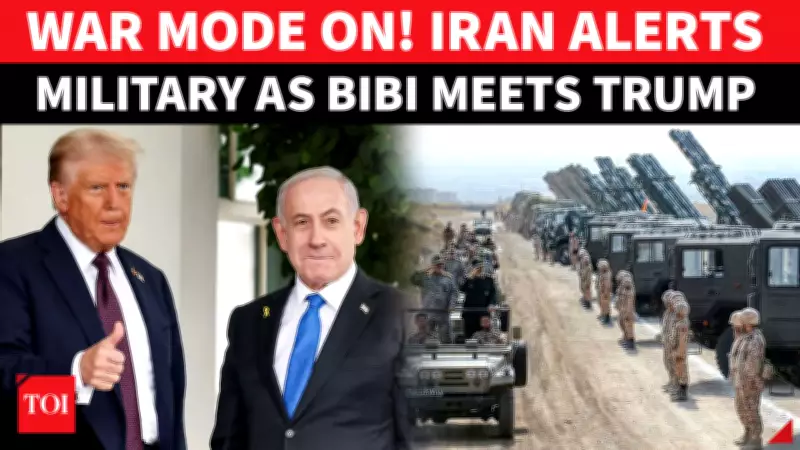
Trump-Netanyahu Summit Ignites Fresh Fears of Military Confrontation with Iran
A pivotal meeting between U.S. President Donald Trump and Israeli Prime Minister Benjamin Netanyahu has sent shockwaves through international diplomatic circles, dramatically escalating concerns about a potential military strike against Iran. The high-stakes discussion, occurring against a backdrop of heightened nuclear tensions, is viewed as a critical moment that could redefine the security landscape of the Middle East.
Israel's Push for a More Aggressive U.S. Posture
Israeli officials are reportedly preparing to urge the Trump administration to adopt a significantly more assertive strategy regarding Iran's nuclear ambitions. Diplomatic sources indicate that Netanyahu's government believes ongoing indirect negotiations between Washington and Tehran are insufficient and may ultimately fail to curb Iran's program. Israel is expected to argue that diplomacy alone cannot guarantee regional security, advocating for the United States to keep all options, including military action, firmly on the table.
This position stems from deep-seated Israeli anxieties over Iran's advancing nuclear capabilities and its support for proxy groups across the region. The Netanyahu administration has long maintained that a credible threat of force is essential to compel Iranian compliance with international demands.

Iran's Defiant Stance and Diplomatic Warnings
In response to the mounting pressure, Iranian authorities have issued stern warnings to the United States. Tehran insists that any negotiations must remain strictly focused on nuclear issues and must proceed without external threats or coercive tactics. Iranian officials have publicly reaffirmed their commitment to diplomatic channels, but only under conditions they deem respectful and free from intimidation.
The Iranian government has cautioned that attempts by Washington to broaden the agenda or apply undue pressure could derail the fragile diplomatic process entirely. This stance highlights the precarious nature of the current talks and the significant trust deficit between the two nations.
Broader Regional and Global Implications
The Trump-Netanyahu meeting is not occurring in isolation. It coincides with a series of other volatile international developments that are straining global stability:
- Ongoing conflicts in Ukraine, with Russia pressing its offensive in the Donetsk region.
- Major shifts in U.S. military posture within NATO, including the reported withdrawal of generals from key European bases.
- Intensifying geopolitical maneuvers, such as U.S. naval forces tracking oil tankers in strategic waterways like the Indian Ocean and the Strait of Hormuz.
- Domestic political upheavals in allied nations, including fallout from the Epstein files affecting the UK monarchy and leadership.
These concurrent crises create a complex and dangerous international environment where a miscalculation regarding Iran could have catastrophic ripple effects. The outcome of the Trump-Netanyahu dialogue is therefore being closely monitored by global powers, regional actors, and security analysts worldwide, all acutely aware that the decisions made could tip the balance between peace and a new, devastating conflict in the Middle East.






