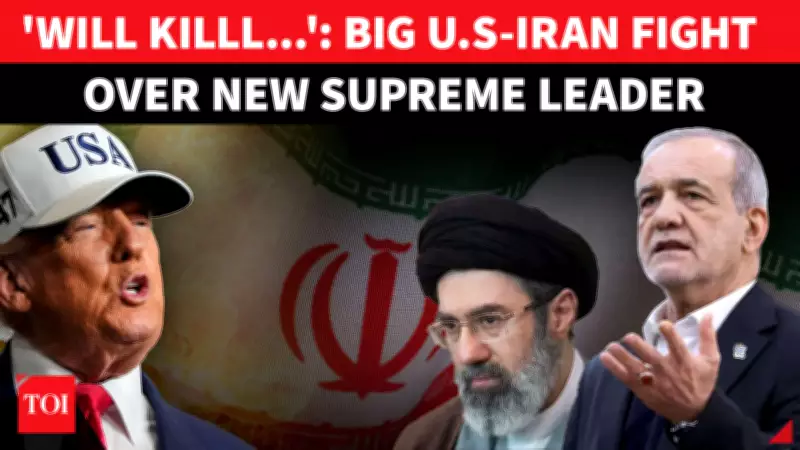
Trump Issues Stark Warning to Iran Over Succession of Supreme Leader
In a provocative statement that has escalated geopolitical tensions, former US President Donald Trump has declared that Iran's next supreme leader will not "last long" without explicit approval from Washington. This bold assertion was made during an exclusive interview with ABC News, where Trump emphasized the United States' unwavering commitment to preventing Tehran from advancing its nuclear weapons program.
Iran's Assembly of Experts Confirms Successor Vote
Simultaneously, Iran's influential clerical body, the Assembly of Experts, has officially confirmed that it has already conducted a vote to select a successor to the long-serving Supreme Leader Ali Khamenei. While the identity of the newly chosen leader remains shrouded in secrecy, this pivotal decision is poised to profoundly influence Iran's domestic political trajectory and its already strained relations with the United States.
The timing of Trump's remarks is particularly significant, as they directly challenge Iran's sovereignty and its internal governance processes. By linking the legitimacy and longevity of Iran's future supreme leader to US endorsement, Trump has introduced a new layer of complexity to the already volatile US-Iran dynamic.

Iran's Forceful Rejection of Trump's Claims
In a swift and vehement response, Iranian officials have categorically rejected Trump's statements, framing them as an unacceptable interference in Iran's internal affairs. Tehran has issued a sharp rebuke, asserting that the selection of its supreme leader is an exclusively domestic matter, determined by Iran's own constitutional and religious frameworks, without any external validation required.
This exchange underscores the deep-seated animosity and mistrust that characterize US-Iran relations, with both nations adopting increasingly confrontational postures. The situation is further complicated by ongoing regional conflicts and security concerns, including Iran's nuclear ambitions and its support for various proxy groups across the Middle East.
Potential Implications for Regional Stability
The convergence of Iran's leadership transition and Trump's warning signals a potential flashpoint in international diplomacy. Analysts suggest that this development could have far-reaching consequences:
- Increased Diplomatic Friction: The US stance may harden Iran's position, leading to more aggressive foreign policy moves from Tehran.
- Impact on Nuclear Negotiations: Trump's comments could derail or complicate future talks aimed at curbing Iran's nuclear program.
- Regional Proxy Conflicts: Tensions might escalate in hotspots like Syria, Yemen, and Lebanon, where Iran and US allies are already engaged in indirect confrontations.
- Global Energy Markets: Any significant deterioration in US-Iran relations could destabilize oil supplies, affecting prices worldwide.
As the international community watches closely, the unfolding scenario highlights the fragile balance of power in the Middle East. The outcome of Iran's leadership selection and the subsequent US response will undoubtedly shape the geopolitical landscape for years to come, with implications extending beyond bilateral relations to affect global security and economic stability.