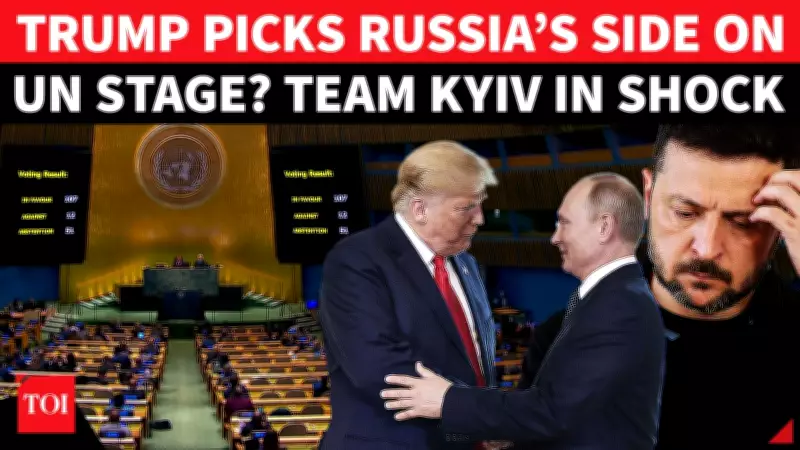
US Abstains From Key UN Vote on Russia-Ukraine Ceasefire, Sparking Diplomatic Reactions
The United States has taken a significant diplomatic step by abstaining from a crucial United Nations General Assembly vote that called for an immediate ceasefire between Russia and Ukraine. This move represents a notable shift in Washington's approach to the ongoing conflict, occurring under the administration of President Donald Trump.
UN Resolution Passes Amidst US Abstention
The resolution, which demanded an immediate cessation of hostilities, passed with 107 votes in favor and 12 votes against. A total of 51 countries chose to abstain, including the United States. This outcome highlights the complex international landscape surrounding the war, with many nations opting for neutrality in this particular vote.
Trump Administration's Changing Policy Direction
The abstention comes as the Trump administration has been pushing for negotiated settlements rather than maintaining unconditional support for Ukraine. U.S. officials explained their position by stating that certain provisions within the resolution could potentially complicate ongoing diplomatic efforts aimed at resolving the conflict through dialogue.

This policy adjustment marks a departure from previous approaches and reflects the current administration's preference for diplomatic solutions over military escalation. The shift has been developing gradually as the administration reevaluates its strategic priorities in Eastern Europe.
Tense Exchanges at the United Nations
During the UN General Assembly session, representatives from Ukraine and Russia engaged in sharp diplomatic exchanges, trading accusations about responsibility for the continued violence. The atmosphere remained charged as delegates presented their respective positions on the conflict and the proposed ceasefire resolution.
The abstention by the United States adds another layer to these diplomatic tensions, potentially influencing how both Ukraine and Russia perceive international support for their positions. Other nations observing the proceedings are likely analyzing the implications of this American decision for future diplomatic initiatives.
Broader Implications for International Diplomacy
This development at the United Nations raises important questions about:
- The future direction of U.S. foreign policy toward the Russia-Ukraine conflict
- How other nations might adjust their diplomatic positions in response
- The potential impact on ceasefire negotiations and peace efforts
- The balance between supporting Ukraine's sovereignty and pursuing diplomatic solutions
As the situation continues to evolve, international observers will be closely monitoring how this UN vote and the U.S. abstention influence the broader diplomatic landscape surrounding the ongoing war in Eastern Europe.