

US Ambassador Credits Trump Administration for India-Pakistan Ceasefire
In a striking diplomatic statement, U.S. Ambassador Michael Waltz has attributed the cessation of hostilities between India and Pakistan to American leadership under the Trump administration. This claim emerged during a tense international gathering, highlighting a growing divergence in foreign policy approaches between the United States and its European allies.
Diplomatic Tensions Surface as European Leaders React
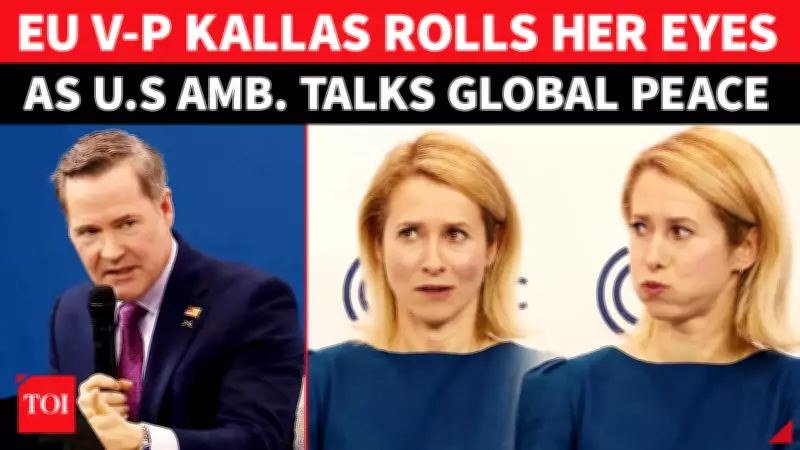
European Union foreign policy chief Kaja Kallas was observed suppressing a smile during the ambassador's remarks, underscoring the palpable diplomatic friction. While the United States has traditionally positioned itself as a central mediator in global conflicts, European officials are increasingly advocating for a more independent and autonomous voice in international affairs.
Kashmir Conflict and UN's Perceived Failures Highlighted
Ambassador Waltz further intensified the discussion by raising the longstanding issue of Kashmir, implicitly criticizing the United Nations for its inability to resolve the conflict. This commentary adds to a broader critique of international organizations' effectiveness in addressing complex geopolitical disputes.

The ambassador's assertions bring to light several critical points:
- The U.S. role in facilitating the India-Pakistan ceasefire is presented as a key achievement of Trump-era diplomacy.
- European leaders' reactions suggest a strategic shift towards greater foreign policy independence from Washington.
- The ongoing Kashmir dispute serves as a case study in the challenges faced by multilateral institutions like the UN.
Broader Implications for Global Conflict Resolution
This incident reflects a widening gap in tone, credit attribution, and strategic vision between the United States and European nations. As global conflicts persist, the debate over who should lead peace efforts and how credit is assigned becomes increasingly contentious. The ambassador's comments not only celebrate American diplomatic successes but also question the efficacy of established international frameworks in hotspots like Kashmir.
The diplomatic exchange underscores a pivotal moment in transatlantic relations, where traditional alliances are being reevaluated in light of evolving global power dynamics and conflict resolution methodologies.






