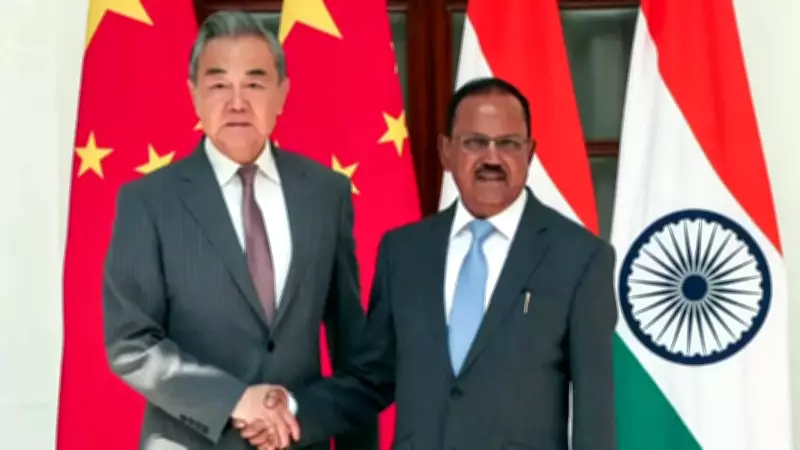
Chinese Foreign Minister Wang Yi is set to visit India to participate in the 16th meeting of BRICS National Security Advisors (NSA) and High Representatives, as confirmed by Beijing on Thursday.
Official Invitation and Schedule
According to a statement from the Chinese foreign ministry on X, Wang Yi, who serves as a Member of the Political Bureau of the CPC Central Committee and Director of the Office of the Central Commission for Foreign Affairs, accepted an invitation from India's National Security Advisor Ajit Doval. The meeting is scheduled to take place in India from June 22 to 23.
Ongoing Diplomatic Engagement
This visit comes amid sustained diplomatic dialogue between New Delhi and Beijing, which has included previous discussions on border issues and broader bilateral relations. Wang Yi previously visited New Delhi last year for the 24th meeting of special representatives, where he held talks with NSA Doval in August.

India's Ministry of External Affairs (MEA) noted at that time that both sides acknowledged the maintenance of peace and tranquility in the India-China border areas since the 23rd Special Representatives Talks, emphasizing the importance of stability along the frontier. The MEA further stated that both countries view each other as development partners rather than rivals, underscoring that differences should not escalate into disputes.
Broader Context of Bilateral Ties
The upcoming visit is seen as part of ongoing efforts to stabilize relations between the two nations, following a series of high-level engagements between Prime Minister Narendra Modi and Chinese President Xi Jinping at multilateral forums, including the SCO summit in Tianjin in 2025. During that summit, the leaders welcomed the positive momentum and progress in bilateral relations since their previous meeting in Kazan in October 2024.
In a statement after the meeting, the MEA emphasized that a stable relationship and cooperation between India and China, representing 2.8 billion people, based on mutual respect, mutual interest, and mutual sensitivity, are essential for the growth and development of both countries, as well as for a multipolar world and a multi-polar Asia that align with 21st-century trends.