

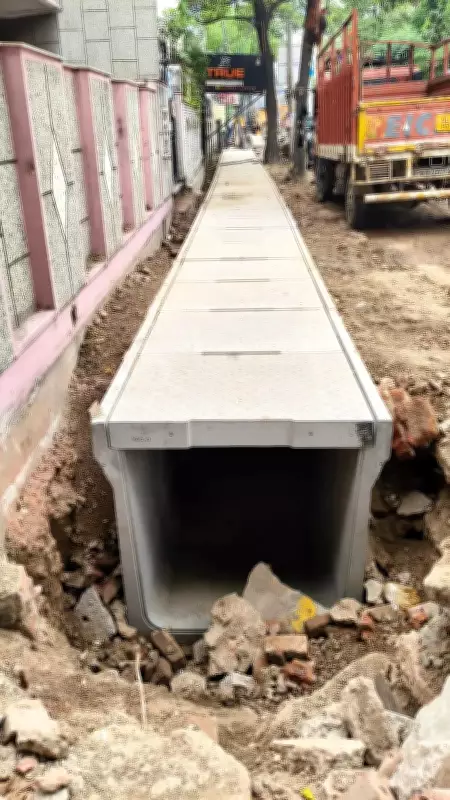
Delhi Government Implements Precast Technology for Stormwater Drain Construction
In a significant infrastructure development, the Delhi government has officially launched a new construction methodology for stormwater drains across the capital. Officials confirmed that the Public Works Department (PWD) will now utilize precast drain boxes instead of the conventional cast in-situ technique, marking a strategic shift in urban drainage management.
Citywide Drain Remodeling Initiative
This innovative approach forms a crucial component of the comprehensive citywide drain remodeling program, which is meticulously aligned with the existing drainage master plan. PWD Minister Parvesh Verma provided detailed insights into the project's current status, revealing that approximately twenty tenders have already been issued to facilitate the implementation.
"Work is actively underway in the Shalimar Bagh area, serving as the initial pilot site," Verma stated. "The project will be systematically expanded to other regions of Delhi in a carefully phased manner to ensure optimal execution and minimal public disruption."

Advantages of Precast Drain Technology
The transition to precast technology is driven by multiple compelling benefits aimed at revolutionizing urban construction practices. Unlike the traditional in-situ method, which involves on-site mixing and pouring of materials like cement, sand, and aggregates, precast drain boxes are manufactured in controlled factory environments and subsequently transported for installation.
Key advantages include:
- Enhanced Structural Durability: Precast drains come with an impressive approximately 50-year warranty, significantly outperforming conventional systems in longevity and resilience.
- Accelerated Project Timelines: Factory production allows for faster on-site installation, dramatically reducing construction periods and associated traffic obstructions.
- Superior Quality Control: Manufacturing under regulated conditions ensures consistent, high-quality components that meet stringent engineering standards.
- Reduced Environmental Impact: The method substantially cuts down dust and air pollution typically generated during on-site construction activities, particularly beneficial in densely populated urban areas.
Minister Verma emphasized the broader vision behind this technological adoption: "We are prioritizing construction methods that are not only efficient and long-lasting but also less intrusive for Delhi's residents. Precast systems enable us to maintain exceptional quality standards while simultaneously minimizing our environmental footprint."
Hybrid Implementation Strategy
Officials clarified that a complete, wholesale replacement of traditional methods is not being pursued. Instead, the government is adopting a pragmatic hybrid model tailored to accommodate diverse site-specific conditions across the capital.
Precast boxes are being deployed primarily in stretches with straightforward, linear alignments where installation logistics are relatively simple. Conversely, the conventional in-situ technique will continue to be employed in areas featuring curves, complex junctions, or irregular layouts that require greater construction flexibility.
An official explained the rationale: "The precast system proves ideal for straight sections, but for bends and intricate connectivity points, the adaptability of in-situ construction remains essential to ensure proper hydraulic functionality and integration with existing infrastructure."
Minimizing Public Inconvenience
A notable secondary benefit of the precast methodology is the considerable reduction in excavation duration. Traditional drain construction often necessitates extended periods where road sections remain dug up due to required curing times for concrete.
"With precast components, installation is swift and efficient, thereby drastically shortening the timeframes during which roads need to be blocked or diverted," Verma highlighted. "This translates to less disruption for daily commuters and local businesses, aligning with our commitment to citizen-centric governance."

The Delhi government's initiative represents a forward-thinking step in urban infrastructure development, blending technological innovation with practical environmental and social considerations to enhance the capital's drainage resilience for decades to come.





