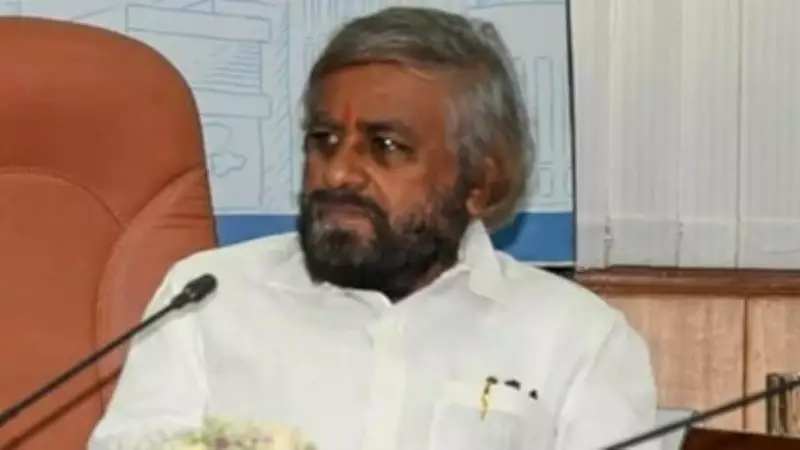
Karnataka's Rural Development and Panchayat Raj Minister Eshwar Khandre has called on the central government to adopt a 90:10 funding ratio between the Centre and the state for the proposed 'VB-G RAM G' scheme. The minister made the appeal during a recent interaction with Union Rural Development Minister, emphasizing the state's readiness to implement the scheme from July 1.
Funding proposal and state readiness
Khandre informed the Centre that Karnataka is fully prepared to roll out the VB-G RAM G scheme starting July 1. He proposed that the funding pattern should be 90% from the Centre and 10% from the state, a departure from the existing MGNREGA model which typically follows a 75:25 ratio for wage material components. The minister argued that this enhanced central assistance would ensure smoother implementation and greater impact in rural areas.
According to officials present at the meeting, the scheme aims to provide guaranteed rural employment, building on the legacy of the Mahatma Gandhi National Rural Employment Guarantee Act (MGNREGA). The minister also proposed renaming the scheme as 'Mahatma Gandhi VBGRAMJI' to honor Mahatma Gandhi's vision of rural self-reliance.

Background and objectives
The VB-G RAM G scheme is envisioned as an upgraded version of MGNREGA, with a focus on creating durable assets and addressing local infrastructure needs. It is designed to provide 150 days of employment per household annually, up from the current 100 days under MGNREGA. The scheme also aims to integrate technology for better monitoring and transparency.
Khandre emphasized that Karnataka has already conducted preliminary surveys and identified priority works in over 20,000 gram panchayats. The state has also trained personnel and set up a dedicated portal for real-time tracking of projects. "We are ready to launch on July 1, but the funding model must be revised to ensure sustainability," Khandre said.
Political and economic implications
The demand for 90:10 funding comes amid ongoing discussions between states and the Centre over fiscal devolution. Several non-BJP ruled states have been pressing for higher central share in welfare schemes. Karnataka, currently governed by the Congress party, has been vocal about the need for more financial autonomy. The minister's proposal is likely to be debated in the upcoming inter-state council meetings.
Economists point out that a higher central share would reduce the burden on state budgets, allowing more resources for health and education. However, the Centre has been cautious about increasing its fiscal deficit. The Union Rural Development Ministry has not yet responded officially to Khandre's proposal.
Historical context and naming tribute
The proposed name 'Mahatma Gandhi VBGRAMJI' is intended to link the scheme with Gandhi's philosophy of gram swaraj (village self-governance). Khandre noted that Gandhi had envisioned a decentralized rural economy where every village is self-sufficient. The renaming is also seen as a political move to associate the Congress party with Gandhi's legacy.
Karnataka has been a pioneer in implementing rural employment schemes, with a track record of utilizing over 95% of allocated funds under MGNREGA in recent years. The state hopes the new scheme will further boost rural incomes and curb migration to urban areas.
Next steps
The Union government is expected to review the proposal and may call for a pilot project before national rollout. Meanwhile, Karnataka has started awareness campaigns in rural areas to educate beneficiaries about the enhanced entitlements. The state government has also allocated Rs 500 crore in the current budget as its share for the scheme, pending central approval.