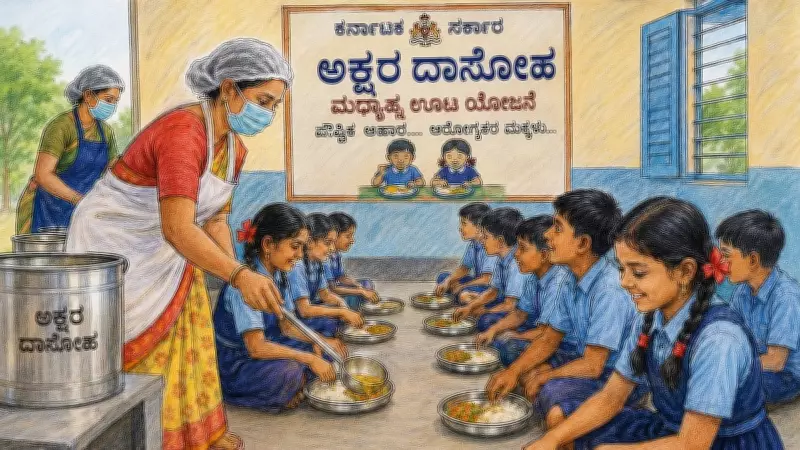
In a significant policy shift, the Karnataka government has made the midday meal scheme strictly contingent on student attendance, enforced through a facial recognition-based system that requires students to mark their presence three times a day. The new rule aims to curb absenteeism and ensure that nutritional benefits reach only those who regularly attend school.
New Attendance Mandate
According to an official order issued by the Department of Public Instruction, all students enrolled in government and aided schools must now undergo facial recognition scanning at the start of the school day, before lunch, and at the end of the day. Only students who successfully complete all three attendance checks will be eligible for the midday meal. The move is part of a broader effort to digitize school administration and improve learning outcomes.
Implementation Details
School authorities have been directed to install biometric devices or use mobile-based facial recognition apps to record attendance. The system will be linked to a centralized database, allowing real-time monitoring by education officials. The policy applies to all classes from 1 to 10 in over 45,000 schools across the state.

Key aspects of the new policy:
- Facial recognition attendance mandatory thrice daily.
- Midday meal served only to students with full attendance.
- Real-time data upload to state education portal.
- Exemptions for students with medical conditions or disabilities.
Reactions and Concerns
While the government touts the policy as a step towards transparency and accountability, critics have raised concerns about privacy and data security. Civil rights groups argue that mandatory facial recognition in schools could infringe on children's privacy rights and lead to surveillance. Some parents have also expressed worry about technical glitches that might deny meals to deserving children.
Education Minister B.C. Nagesh defended the move, stating that the system is designed to ensure that the benefits of the midday meal scheme reach genuine beneficiaries. He emphasized that the government has taken measures to secure data and provide offline alternatives in case of network failures.
Broader Implications
Karnataka is the first state in India to link midday meals so directly with biometric attendance. The policy could set a precedent for other states grappling with high dropout rates and low attendance. However, its success will depend on robust infrastructure, data protection, and addressing equity issues for students without reliable internet access.
The new rule takes effect from the upcoming academic year, with schools given a three-month grace period to install the necessary equipment.