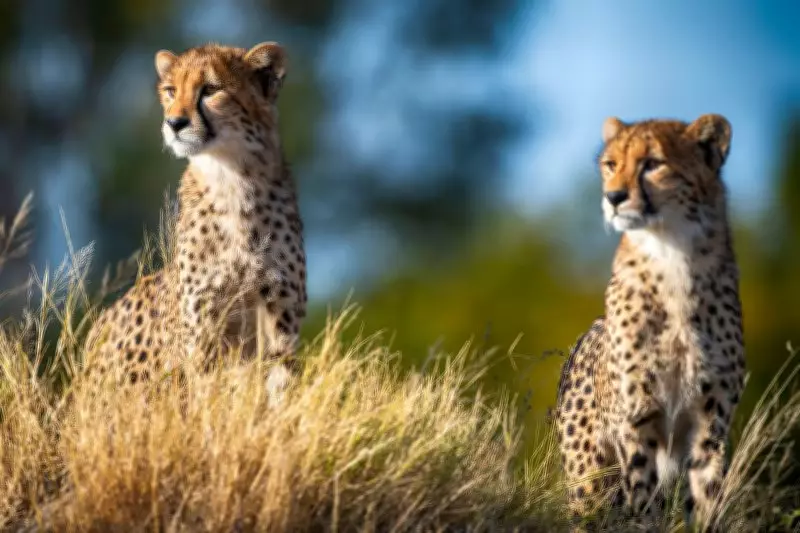
The National Tiger Conservation Authority (NTCA) has recommended establishing multiple district-level Cheetah Rapid Response Teams and adopting a landscape management strategy based on the Tiger Conservation Plan to bolster long-term cheetah conservation in India. These recommendations are outlined in the NTCA's annual progress report, Bringing Back the Cheetah to India, which also calls for implementing the Monitoring System for Tigers – Intensive Protection and Ecological Status (MSTrIPES) across the larger cheetah landscape.
Current Cheetah Population in India
India currently hosts a total of 53 cheetahs, comprising 13 adults, 17 sub-adults, and 23 cubs. Of these, three were relocated to Gandhi Sagar Wildlife Sanctuary from Kuno National Park. In February 2026, nine cheetahs were translocated to India from Botswana.
Challenges at Gandhi Sagar Wildlife Sanctuary
The report highlights that Gandhi Sagar Wildlife Sanctuary faces multiple pressures, including a dense human population in surrounding districts. Livestock grazing is intense, with approximately 88 cattle or buffalo and 45 goats or sheep per square kilometre. Additionally, a state highway cuts through the sanctuary, fishing communities have settled along the reservoir, and the Gandhi Sagar township continues to expand within the core area.

Communities such as the Bhil, Gurjar, Banjara, and Thakur inhabit the Gandhi Sagar landscape, and their cooperation is deemed essential for the success of the cheetah programme.
Optimism for Long-Term Success
Despite these challenges, the report expresses optimism: "Despite these challenges, Gandhi Sagar remains one of the most promising places in India to build a cheetah population for the long-term. The habitat is large, the ecosystem is diverse, and steps like predator-proof fencing are already in place. With continued work on restoring grasslands, boosting prey numbers, and building trust with local communities by the forest department and scientific inputs from authorizing agencies, this landscape could genuinely become a safe and thriving home for cheetahs in the years ahead."
Integrated Landscape Management
The report also recommends developing an integrated landscape management approach involving the governments of Madhya Pradesh and Rajasthan. Recently, cheetahs have occasionally entered Rajasthan's forests. An official stated, "An MoU is being planned between the two states for the protection of Cheetahs. Hopefully, it will be signed soon."