

PM Modi Inaugurates Seva Teerth and Kartavya Bhawans, Highlights Shift to Citizen-Centric Governance
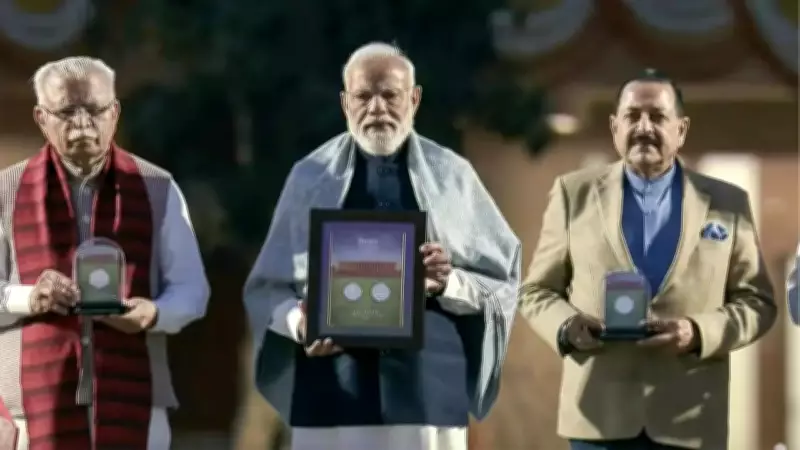
In a landmark event on Friday, Prime Minister Narendra Modi inaugurated two new Kartavya Bhawans and released a commemorative postage stamp and coin, marking a significant transition in India's administrative landscape. This ceremony occurred shortly after the Prime Minister moved into his new office, Seva Teerth, symbolizing a fresh chapter in the nation's development journey.
A New Era in India's Governance
Addressing the gathering, PM Modi underscored that the day of February 13th represents a historic beginning for India's progress. He articulated a collective resolve to achieve the goal of Viksit Bharat (Developed India) by 2047, emphasizing that the newly inaugurated structures are designed to fulfill the aspirations of the Indian people rather than serve colonial interests.
The Prime Minister reflected on the legacy of buildings like South Block and North Block, which were constructed during the British era to reinforce imperial dominance. "The intention behind their construction was to reinforce British dominance and keep India in a state of subjugation for generations," he stated, highlighting the symbolic shift towards indigenous governance models.

Key Functions and Ministries Housed in New Buildings
Seva Teerth now consolidates critical government offices, including:
- The Prime Minister's Office
- The National Security Council Secretariat
- The Cabinet Secretariat
Previously, these entities operated from separate locations, leading to logistical challenges. The integration aims to enhance coordination and efficiency in decision-making processes.
Meanwhile, Kartavya Bhavan-1 and 2 accommodate several pivotal ministries, such as:
- Ministry of Finance
- Ministry of Defence
- Ministry of Health and Family Welfare
- Ministry of Corporate Affairs
- Ministry of Education
- Ministry of Culture
- Ministry of Law and Justice
- Ministry of Information and Broadcasting
- Ministry of Agriculture and Farmers Welfare
- Ministry of Chemicals and Fertilizers
- Ministry of Tribal Affairs
This consolidation addresses the inadequacies of the century-old structures, which had become dilapidated and lacked sufficient space and modern facilities to meet the needs of a rapidly evolving nation.
Top Quotes from PM Modi's Address
In his speech, the Prime Minister delivered several impactful statements that encapsulate the vision behind these new developments:

- "Future generations should remember this era as a time when India re-wrote its fate."
- "I want Seva Teerth to be a role model for citizen-centric governance."
- "Decisions taken in these new buildings will decide the course of our journey to emerge as a developed nation by 2047."
- "Dreams of citizens our biggest assets; their aspirations should guide us."
- "You all will play key role as India has boarded 'Reform Express', is re-writing international ties with new trade deals."
- "Unfortunate that road along PM's residence was called Race Course Road and that leading to President's House was Rajpath."
- "I can say with pride that Seva Teerth, Kartavya Bhawans built to fulfil aspirations of Indians, not of any monarch."
- "These 100-year-old buildings were becoming dilapidated, lacked space, facilities; they were inadequate to meet needs of a new nation."
- "India's capital moved from Kolkata to buildings on Raisina Hill that were built according to the wishes of British royalty."
- "South Block and North Block were built with an aim to keep India under colonial shackles for centuries."
- "We are entering Seva Teerth and Kartavya Bhawan 1 and 2 with a resolve to achieve the goal of Viksit Bharat."
Symbolism and Historical Context
PM Modi pointed out the historical significance of the location, noting that India's capital was shifted from Kolkata to the buildings on Raisina Hill, which were constructed to cater to British royal preferences. He lamented the colonial nomenclature, such as Race Course Road and Rajpath, which have since been renamed to reflect Indian values and identity.
The Prime Minister expressed pride in the fact that Seva Teerth and the Kartavya Bhawans are erected with the sole purpose of serving the Indian populace, free from monarchical or imperial influences. This move is seen as a step towards decolonizing administrative spaces and fostering a governance model that prioritizes public welfare and national progress.
As India embarks on this transformative journey, the inauguration of these buildings marks a pivotal moment in the country's pursuit of becoming a developed nation by 2047, with citizen aspirations at the forefront of policy-making and administrative reforms.





