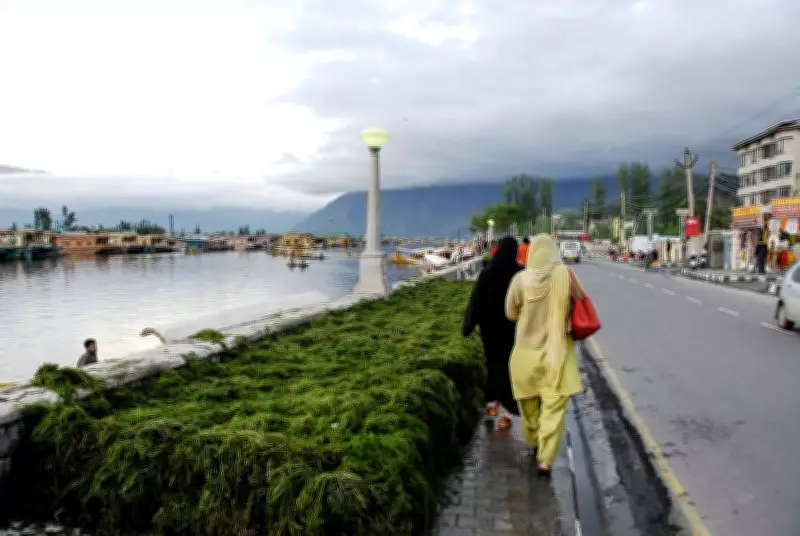
The Supreme Court's recognition of the right to walk on safe, demarcated footpaths as a fundamental right has raised hopes of holding public authorities accountable for their chronic failure to protect pedestrians. In India, more than 100 pedestrians are killed in road accidents every day, according to 2024 data from the Ministry of Road Transport and Highways.
Pedestrian Deaths Triple in a Decade
As per the ministry's 2024 data, pedestrians are the second highest victims of road accidents in the country, constituting 20.6 percent of fatalities. That translates to 36,526 deaths in 2024, compared to 12,330 in 2014, when pedestrians accounted for 8.8 percent of total road accident fatalities. The numbers have trebled in the past 10 years.
The percentage of pedestrian deaths is even more alarming in data from the Indian Institute of Technology, Delhi, published in 2024 in its 'India Status Report on Road Safety'. Based on FIRs in six states, it puts the percentage of pedestrian fatalities at 44 percent in Delhi, 29 percent in Haryana, 28 percent in Uttarakhand, 24 percent in Maharashtra, 23 percent in Chandigarh and 10 percent in Chhattisgarh.

Infrastructure Neglect and Encroachments
Many roads lack pavements entirely. Even where footpaths exist, they are often unwalkable due to missing slabs, uneven surfaces, power distribution transformers, open pits and trenches, manholes, dumped garbage and construction material, hawkers and parked vehicles. Pedestrians are forced to walk on the road, at great risk to their lives.
Data on pavements is scarce. In 2024, it was estimated that only 56 percent of Delhi roads have footpaths. In Bengaluru, one of the worst cities for pedestrian safety, reports indicate only 10 percent of the existing footpath network is walkable. Gurugram is no better: after swanky roads were built, a 2020 survey found only 28 percent of the road network had pavements.
Demographic Imperative for Safe Walkways
The urgency for safe, walkable pedestrian walkways is underscored by India's changing demography. Over 15 crore people in the country are above 60 years of age, and this number is expected to rise to 23 crore by 2036. This population needs safe surfaces for walking, both for health reasons and mobility. Similarly, a large population of people with disabilities requires pavements and road crossings that facilitate, not impede, travel.
The 'IRC-103:2022 Guidelines for Pedestrian Facilities', formulated by the Indian Road Congress, provides standards for planning, designing and maintenance of pedestrian facilities to ensure universal accessibility. The standard is available online, and citizens should demand that pavements be built and maintained according to these guidelines.
Citizen Action Post-Judgment
In the past, civil society groups and activists have pushed for safe pavements. Now, the landmark Supreme Court judgment should catalyze all citizens to demand time-bound laying of pavements where none exist, repairing existing ones, and removal of encroachments. As consumer affairs expert Pushpa Girimaji writes, "Citizens must use this opportunity to enforce accountability in urban development and civic authorities."