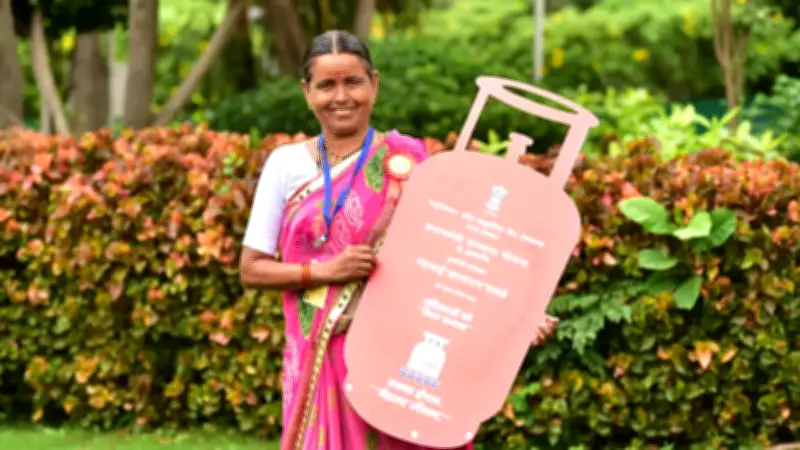
The Pradhan Mantri Ujjwala Yojana (PMUY) stands as one of India's most transformative social welfare programs, designed to provide clean cooking fuel to economically disadvantaged households. Launched by Prime Minister Narendra Modi on May 1, 2016, from Ballia in Uttar Pradesh, the scheme aims to enhance the health, dignity, and quality of life for women by replacing traditional cooking fuels like firewood, coal, crop residue, and cow dung with Liquefied Petroleum Gas (LPG). Over the past decade, PMUY has grown into one of the world's largest clean-energy access initiatives, with Uttar Pradesh emerging as its biggest beneficiary state.
Thoughtful Genesis
Before PMUY, millions of Indian households, especially in rural areas, depended on traditional biomass fuels for cooking. These fuels generated harmful smoke, exposing women and children to indoor air pollution and increasing the risk of respiratory diseases, eye infections, and other health issues. Women often spent hours daily collecting firewood, reducing time for education, employment, and other productive activities. The government thus aimed to address both health and gender-related challenges through a large-scale clean cooking fuel program.
Objectives of PMUY
The scheme was launched with the following goals:

- Provide clean cooking fuel to poor households.
- Protect women and children from indoor air pollution.
- Reduce health risks associated with traditional cooking fuels.
- Promote women's empowerment by issuing LPG connections in the name of adult women.
- Improve environmental sustainability through reduced dependence on biomass fuels.
- Enhance the quality of life in rural households.
Salient Features of the Scheme
1. Free LPG Connection
Eligible women from poor households receive an LPG connection without bearing the initial security deposit.
2. Connection in Woman's Name
The LPG connection is issued in the name of an adult woman, promoting financial and social empowerment.
3. Financial Assistance
The government provides financial support for the security deposit of the LPG cylinder, pressure regulator, LPG hose, and installation charges.
4. Ujjwala 2.0
Launched in 2021, PMUY 2.0 expanded coverage and simplified documentation, especially for migrant workers. It also provided support for the first refill and cooking stove.
Eligibility Criteria
To avail benefits under PMUY, the applicant must:
- Be an adult woman (18 years or above).
- Belong to an eligible poor household.
- Not already possess an LPG connection in the household.
- Meet criteria prescribed by the Government of India under various beneficiary categories.
How to Apply
Offline Application
Visit the nearest LPG distributor, obtain the PMUY application form, submit the completed form along with required documents, and undergo verification by concerned authorities. Upon approval, the LPG connection is issued.
Online Application
Applications can also be submitted through the official websites of oil marketing companies.
Documents Required
- Aadhaar Card
- Ration Card
- Bank account details
- Mobile number
- Identity proof
- Address proof
- Passport-size photograph
Uttar Pradesh: The Largest Beneficiary State
Uttar Pradesh holds a special place in PMUY's success story. Since the scheme was launched from Ballia district, the state has consistently led in the number of LPG connections distributed.

Key Achievements in Uttar Pradesh
- Over 1.86 crore LPG connections have been provided under PMUY since its launch, making Uttar Pradesh the largest beneficiary state.
- Nearly every district has seen a substantial increase in LPG penetration.
- Rural households have shifted significantly from traditional fuels to cleaner cooking solutions.
- The LPG distribution network has expanded, creating employment and improving accessibility in remote regions.
Impact on Rural Women
For millions of women in Uttar Pradesh, the scheme has transformed daily life by reducing exposure to harmful smoke, eliminating lung and chest ailments, saving time previously spent collecting firewood, making cooking faster and more convenient, improving household hygiene, and enhancing dignity and social empowerment.
Additional Support by the Uttar Pradesh Government
The Uttar Pradesh government has further strengthened PMUY benefits by providing free LPG cylinder refills to eligible beneficiaries during major festivals like Holi and Diwali, encouraging sustained LPG usage among economically weaker households.
Socio-Economic Impact
Health Benefits
- Reduction in indoor air pollution.
- Lower incidence of respiratory illnesses.
- Improved health outcomes for women and children.
Women's Empowerment
- Ownership of LPG connections in women's names.
- Greater convenience and reduced drudgery.
- More time for education, income generation, and family care.
Environmental Benefits
- Reduced dependence on firewood and biomass.
- Lower pressure on forests and natural resources.
- Contribution to cleaner household energy consumption.
Economic Benefits
- Expansion of LPG distribution infrastructure.
- Employment generation through new dealerships and delivery networks.
- Growth in rural energy markets.
The Pradhan Mantri Ujjwala Yojana represents a landmark intervention in India's social welfare and clean-energy landscape. By providing LPG connections to millions of poor households, the scheme has significantly improved health outcomes, enhanced women's empowerment, and promoted cleaner cooking practices. Uttar Pradesh, as the largest beneficiary and the state from which it was launched, stands as the most prominent example of PMUY's impact. The program has not only brought clean fuel to rural kitchens but also contributed to broader goals of social inclusion, public health improvement, and women's empowerment. As the scheme continues to expand and evolve, it remains a key pillar of India's effort to ensure 'Clean Fuel, Better Life' for every household.