

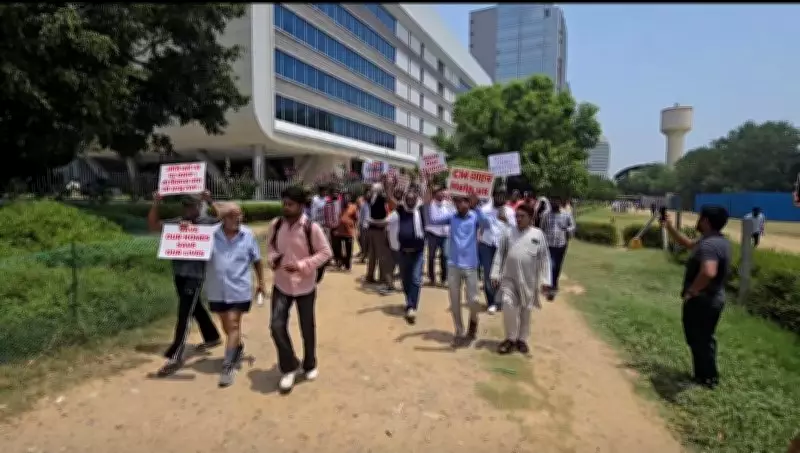
Around 50 property owners from DLF Phases 1 to 5 marched through Gurugram on Thursday, carrying placards that read 'Save Our Homes, Save Our Lives' and 'CM Saheb Help Us', in a protest against the ongoing sealing drive by the Department of Town and Country Planning (DTCP). The demonstration followed a maha panchayat held at U Block Metro Park in DLF Phase 3 under a 'Stop Sealing, Stop Demolition' banner, presenting a united front across the five colonies that have been the focus of the enforcement action.
Demands for regularisation and TOD policy
At the heart of the owners' charter is a demand for the government to formally approve a transit-oriented development (TOD) policy for these areas, permit higher Floor Area Ratio (FAR), and allow mixed land use. This would legalise the paying-guest and co-living accommodations, including stilt-plus-four buildings, that are now being sealed. Owners argued that these facilities largely house corporate employees working in Gurugram’s offices, and sealing them would displace a key section of the city’s working population.
The protesters framed the crackdown as arbitrary, with placards capturing the grievance that renting out an entire house is treated as legal while renting out a single room is branded illegal. The protest comes amid a sustained restoration drive in which the DTCP, acting on directions from the Punjab and Haryana High Court, has sealed hundreds of illegally run PG rooms across DLF colonies for violating zoning norms, building plans, and development control regulations. The department has since paused sealing for about a week and issued a public advisory giving occupants until June 30 to make alternative arrangements.

Split opinion on regularisation
The demand for blanket regularisation has split opinion among stakeholders. One section argues that if these establishments are to continue, they should be formally declared commercial entities and made to pay commercial property tax and commercial power tariffs, ending the practice of running businesses on residential rates. Others have pushed back firmly, warning that regularising such density would overwhelm colonies whose water, sewerage, and road infrastructure was designed for a fixed population and cannot be expanded to absorb the load. Allowing unchecked commercialisation, they caution, risks the eventual collapse of civic services in these neighbourhoods.
With the June 30 deadline approaching and owners pressing for a policy route out of the impasse, the standoff sets up a larger question for the state government: whether to enforce the existing residential zoning or rewrite it to reflect the commercial reality that has already taken root across old Gurugram.






