

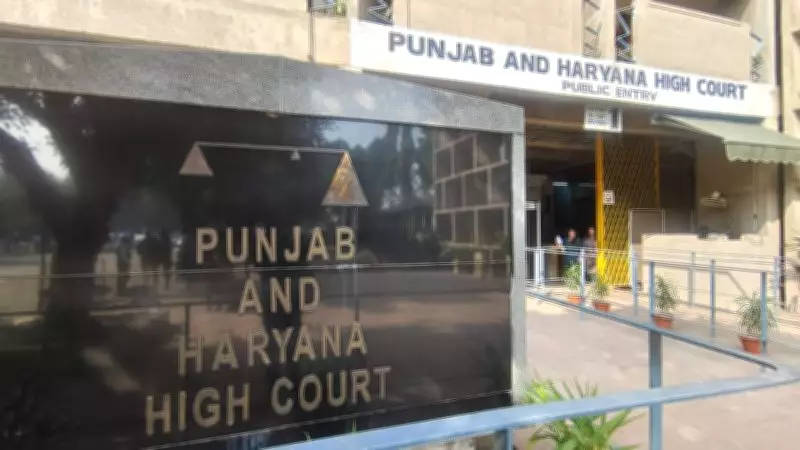
The Punjab and Haryana High Court has clarified that a failed prosecution cannot automatically be deemed malicious. Justice Pankaj Jain, while allowing an appeal, set aside lower court orders that had awarded Rs 80,000 in token damages to an accused for mental anguish.
Case Background
The dispute began when a complainant approached the Punjab Vigilance Bureau alleging that a person had acquired properties through corrupt means. The accused then filed a civil suit seeking Rs 10 lakh plus 18% interest, claiming the allegations were false, scandalous, and defamatory. The complainant denied malice, stating the allegations were made in good faith.
The trial court decreed the suit, awarding Rs 80,000 as token damages for mental agony. The lower appellate court affirmed this decision.

High Court's Ruling
Justice Jain, citing a Supreme Court judgment, emphasized two essential elements for malicious prosecution: the plaintiff was prosecuted without reasonable and probable cause and with an oblique motive, and the prosecution terminated favorably to the plaintiff. The burden lies on the plaintiff to prove both elements.
"Acquittal cannot constitute the sole reason to grant a decree in favour of the plaintiff," the court observed. The lower courts failed to record any finding regarding an oblique motive on the complainant's part.
Implications
The High Court noted that the lower courts based their decision solely on the accused's acquittal without independent inquiry. "Every failed prosecution cannot be labelled as malicious," the Bench stated. Allowing the appeal, the court concluded that without evidence of oblique motive, the lower court's findings could not be sustained.
The ruling reinforces the legal principle that compensation for malicious prosecution requires proof of malice, not just a failed prosecution.






