Iran Launches Major Retaliatory Strikes Against US Military Bases Across Middle East
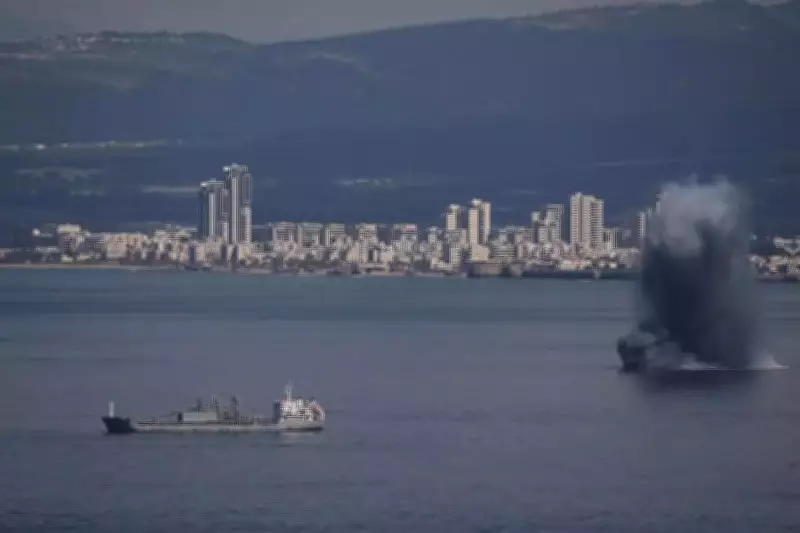
In a significant escalation of regional tensions, Iran executed coordinated retaliatory strikes against American military installations across the Middle East on Saturday. This military action came directly in response to a major joint airstrike campaign launched earlier by the United States and Israel against Iranian targets.
Operation "Truthful Promise 4" Targets Multiple Strategic Locations
Iran's paramilitary Revolutionary Guard announced the operation, naming it "Truthful Promise 4." According to their official statement, the first phase of this retaliatory campaign specifically targeted the command headquarters of the United States Fifth Fleet in Bahrain. This critical naval base is situated just southeast of central Manama, the capital of Bahrain.
The Revolutionary Guard further confirmed that additional strikes hit American military facilities in Qatar and the United Arab Emirates, along with various military targets within Israel itself. While the immediate extent of damage at the US Fifth Fleet headquarters remains unclear, the strategic significance of targeting this naval command center cannot be overstated.

Casualties and Regional Responses
Initial reports indicate one confirmed fatality resulting from the Iranian missile attacks. Shrapnel from strikes in the United Arab Emirates capital killed one person, marking the first known death in this latest round of regional conflict. The state-run WAM news agency confirmed this casualty.
Bahrain's ambassador to the United States, Abdalla Al-Khalifa, confirmed attacks occurred against "sites within the Kingdom" without providing specific details. In a statement posted on social media platform X, the ambassador characterized the strikes as a "blatant violation of sovereignty."
Defensive Measures and Diplomatic Posturing
Qatar's Ministry of Defense reported successfully intercepting several missiles before they could enter Qatari airspace. The ministry stated that these incoming threats were "dealt with as soon as they were detected in accordance with the pre-approved security plan," emphasizing that Qatari Armed Forces possess full capabilities to safeguard the nation.
Iran's Ministry of Foreign Affairs issued a strongly worded statement declaring that the country "will not hesitate" in responding to what it described as renewed military aggression. "The time has come to defend the homeland and confront the enemy's military assault," the foreign ministry posted on X. "Just as we were prepared for negotiations, we have been even more prepared for defense at all times. The armed forces of the Islamic Republic of Iran will decisively respond to the aggressors with full authority."
Broader Regional Implications and Strategic Concerns
The escalating conflict has brought renewed focus to several critical maritime chokepoints in the region, including:
- The Persian Gulf
- The Red Sea
- Parts of the Indian Ocean
These strategic waters contain three vital maritime passages: the Suez Canal and Bab al-Mandeb at either end of the Red Sea, and the Strait of Hormuz between Iran and Oman. Tehran has repeatedly warned that it could close the Strait of Hormuz if attacked—a move that would disrupt a significant portion of global oil shipments and have profound economic consequences worldwide.
Meanwhile, Iran-aligned Houthi rebels in Yemen have indicated they would resume attacks on commercial shipping lanes as well as on Israel, potentially expanding the conflict's geographical scope.
Travel Disruptions and Immediate Consequences
The military strikes have already caused significant disruptions to international air travel. Multiple airlines have been forced to reroute or suspend services between India and Europe due to airspace closures in the affected regions. One notable incident involved an Air India Tel Aviv flight returning to India mid-route as tensions escalated.

The situation remains fluid and highly volatile, with regional powers positioning themselves for potential further escalation. The targeting of US military assets across multiple Middle Eastern nations represents one of the most direct confrontations between Iran and American forces in recent years, raising concerns about broader regional stability and international security implications.