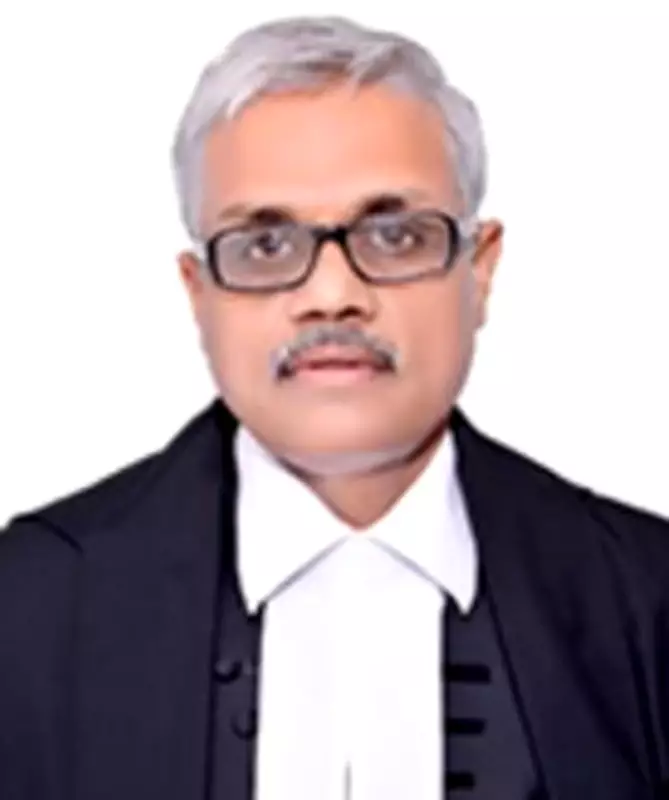
Justice Mahabir Singh Sindhu of the Punjab and Haryana High Court passed away in the early hours of Sunday at Medanta Hospital, Gurugram, after a prolonged illness. He was 59. The High Court confirmed that he breathed his last at 2:50 am. Justice Sindhu is remembered not only for the cases he decided but also for the questions he raised, the constitutional values he defended, and his insistence on fairness and accountability.
In one of his orders, Justice Sindhu highlighted that Dr Rajendra Prasad's "first regret"—the absence of educational qualifications for lawmakers—remained unaddressed nearly 75 years after the Constitution came into force. This observation underscored his belief that the law must serve broader constitutional principles.
Landmark Rulings on Arrest and ED Powers
Justice Sindhu consistently emphasized procedural fairness. In a landmark ruling, he held that investigating agencies are duty-bound to furnish the grounds of arrest to an accused, warning that failure to do so renders the arrest illegal. He also cautioned courts against becoming "an extended arm" of investigating agencies, particularly in cases under the Prevention of Money Laundering Act, where he reminded special courts that they were "not supposed to act as an extended arm of the ED" while considering remand requests.

His judgments often looked beyond the immediate dispute to larger constitutional values. He imposed exemplary costs on a public service commission after finding that the dependent son of a soldier wounded in action had been denied reservation, forcing the family into unnecessary litigation. In another case, he called for comprehensive guidelines to regulate spa and massage centres in Chandigarh, citing concerns over misuse.
Systemic Failures and Accountability
Justice Sindhu was unsparing when confronted with systemic failures. Disturbed by extraordinary delays in a murder trial, he remarked that the proceedings had turned into a "fairy tale" after only one witness was examined in nearly three years. He also criticized the misuse of powers by the Vigilance Bureau while quashing an FIR, and observed that "those who break the law should not make the law" while refusing to suspend the conviction of a former legislator seeking to contest elections.
His court also took a strong stand on institutional accountability. In a significant judgment, he held that investigating agencies must provide the grounds of arrest to the accused, reinforcing constitutional safeguards. According to the High Court's statement, his rulings consistently reflected a belief that the rule of law is measured not by the authority of the State, but by the protection it affords the individual.
A Journey from Village to Bench
Justice Sindhu's own journey to the Bench reflected quiet determination. A first-generation lawyer from Masoodpur village in Haryana's Hansi district, he studied at Government High School in his native village before obtaining his LL.B. degree from Panjab University, Chandigarh, in 1992. He enrolled with the Bar Council of Punjab and Haryana the same year.
As an advocate, he built a wide-ranging practice in civil, criminal, constitutional, and service law, appearing for institutions such as the Haryana Public Service Commission, Kurukshetra University, the Indian Red Cross Society (Haryana State Branch), cooperative banks, and BSNL. He also served as Additional Central Government Standing Counsel, Additional Government Pleader for the Union Territory, Chandigarh, Deputy Advocate General, Haryana, and Additional Advocate General for both Punjab and Haryana before returning to private practice. In 2016, he was empanelled to represent the Punjab and Haryana High Court and subordinate courts in Punjab, Haryana, and Chandigarh.
Elevation to the Bench
Justice Sindhu was elevated as an Additional Judge of the Punjab and Haryana High Court on July 10, 2017, and was appointed a permanent Judge on December 3, 2018. Born on April 4, 1967, he leaves behind a legacy defined not only by the decisions he rendered but by the constitutional values he consistently sought to uphold.

According to the High Court's statement, his judgments reflected a belief that the law was not merely a body of rules to be applied, but a constitutional promise that demanded fairness, restraint, and accountability from every institution exercising power. Justice Mahabir Singh Sindhu is survived by his family and a legal community that will remember him for his unwavering commitment to justice.