The Supreme Court of India, in a landmark ruling on June 19, 2026, declared the right to walk as a fundamental right under Article 19(1)(d) of the Constitution, emphasizing that this right precedes the privilege of motorized vehicles. The judgment came in response to a petition following the tragic death of a five-year-old child struck by a tanker while walking to school.
Supreme Court Ruling and Its Implications
The Court explicitly stated: "The primary right of movement under Article 19(1)(d) is the Fundamental Right to Walk, a right that precedes the right to move on wheels… the fundamental right to walk on demarcated footpaths shall override the privilege of a motorised vehicle." This ruling builds on a May 14, 2025 judgment that recognized the right to walk safely under Article 21, which guarantees the right to life and dignity.
Between 2019 and 2024, over 1.8 lakh pedestrians died across India, run over by motor vehicles, falling into open drains or manholes, or suffering fatal falls on disintegrating pavements. The Court linked the issue to India's cultural and spiritual traditions, noting that walking is "meditation in motion" and a form of resistance that inspired the freedom struggle.

Urban Infrastructure Challenges
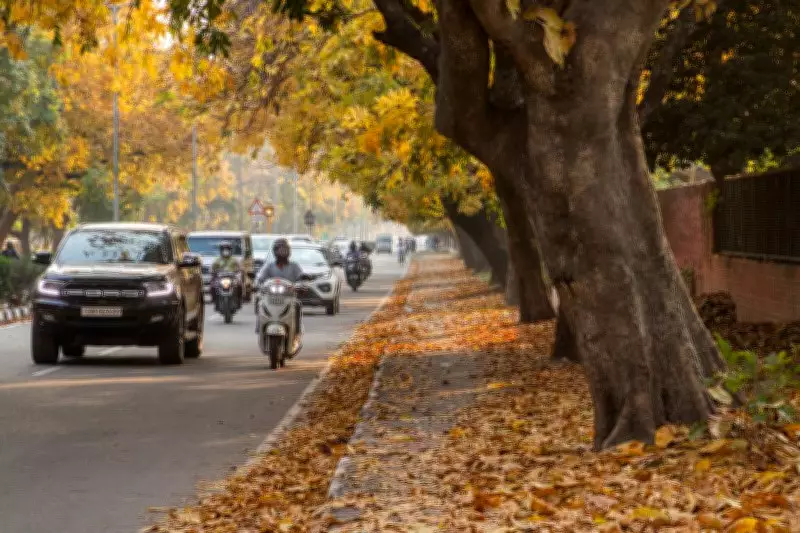
Despite only 13% of Delhi's population owning cars, with 87% using public transport, bicycles, or walking, urban infrastructure remains heavily skewed toward motorists. Sidewalks, where they exist, are often encroached upon by hawkers, vendors, or used as parking spaces, forcing pedestrians onto roads. The Indian Road Congress 2022 guidelines mandate pavements of 4 to 6.5 meters width, at least 250 mm above the road surface, but these norms are rarely enforced.
Shyam Saran, former Foreign Secretary and avid trekker, argues that the right to walk is not just about safe sidewalks but reversing cultural and spiritual deprivation. He notes that walking is a spiritual exercise in Indian tradition, as seen in pilgrimages like the Dandi March. However, modern pilgrimage has become commercialized, with helicopter rides to sites like Kedarnath Temple, undermining the spiritual value of the journey.
Comparative Global Practices
In many European and Southeast Asian cities, sidewalks are a defining feature, with designated spaces for vendors that do not interfere with pedestrian rights. Some urban areas are designated as no-vehicle zones for safe walking and shopping. Indian urban planners could draw lessons from these examples.
The Court's decision theoretically allows citizens to take the State to court if their right to walk on well-maintained sidewalks is denied. However, Saran doubts legal action alone will bring change, emphasizing the need for civic education and awareness campaigns to rediscover the joy of walking.
Mobility vs. Car Ownership
India's car ownership density is only 26 per 1,000 people, compared to 800 per 1,000 in Europe and nearly 1,000 per 1,000 in the US. Even a fraction of that figure would cause permanent gridlock. The switch to electric vehicles poses power challenges. The only sustainable solution is expanding public transport and limiting private car ownership. As Saran states: "People have the right to mobility. They do not have the right to own and run cars."
Rebecca Solnit, in her book 'Wanderlust: A History of Walking', captures the essence: "When we walk, the brain is unmoored from immediate tasks; the rhythmic movement of the legs coaxes the mind into a creative flow state." Saran hopes the Supreme Court's intervention will begin to reverse the tragedy of modern Indian cities that deny this restorative experience.