

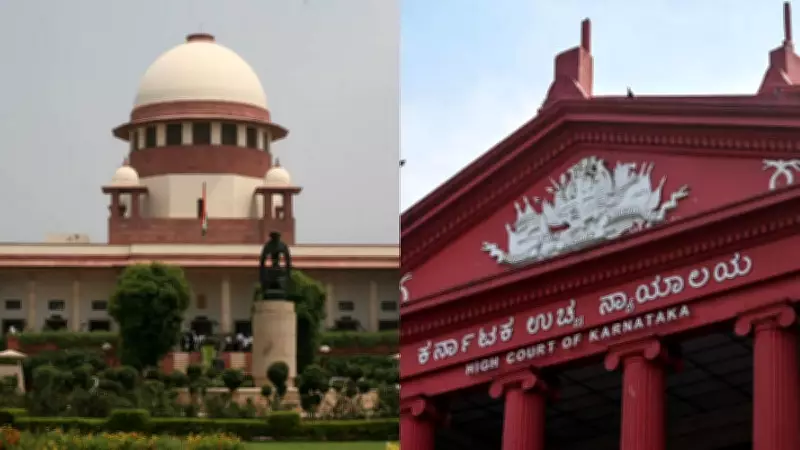
The Supreme Court on Tuesday stayed a Karnataka High Court order that had directed Oil Marketing Companies (OMCs) to consider and decide a representation from a dedicated ethanol manufacturer seeking an enhanced supply quota for the current supply year.
Background of the Case
The Karnataka High Court had earlier passed an interim order asking OMCs—including Indian Oil Corporation, Bharat Petroleum Corporation, and Hindustan Petroleum Corporation—to treat the representation of the ethanol producer sympathetically. The manufacturer had sought an increase in its allocated quota, citing capacity to produce more ethanol than the current supply agreement allowed.
The OMCs challenged the High Court's directive in the Supreme Court, arguing that ethanol allocation is governed by a central policy and that any change in quota must follow a competitive bidding process or be based on national-level considerations.

Supreme Court's Intervention
A bench of Justices Sanjiv Khanna and Dipankar Datta issued a stay on the High Court's order, noting that the allocation of ethanol is a policy matter that should not be interfered with by courts without due consideration of the broader regulatory framework. The bench observed that the ethanol blending program is a key component of India's energy security and environmental goals, and any deviation from the established allocation mechanism could disrupt the supply chain.
Senior Advocate Mukul Rohatgi, appearing for the OMCs, argued that the High Court's order effectively compelled the companies to allocate additional ethanol to one manufacturer, which could set a precedent for other producers to seek similar relief, leading to administrative chaos.
Impact on Ethanol Industry
The Supreme Court's stay is expected to maintain the status quo in ethanol allocation for the current supply year. The ethanol blending program, which aims to achieve 20% blending by 2030, relies on a transparent and equitable distribution of supplies among manufacturers. The OMCs had contended that any ad hoc increase in quota for one producer would undermine the competitive bidding process and potentially lead to shortages for other buyers.
According to industry sources, the dedicated ethanol manufacturer had invested heavily in expanding production capacity and had sought an additional 10 million liters for the 2025-26 supply year. The company had argued that it was operating at only 60% of its capacity due to the current quota, and the increase would help it achieve economies of scale.
Legal and Policy Considerations
The Supreme Court's decision underscores the judiciary's reluctance to interfere in policy-driven allocation decisions, especially when they involve multiple stakeholders and national objectives. The court has listed the matter for further hearing in August, allowing both sides to present detailed arguments on the legality of the High Court's intervention.
Legal experts note that the case highlights the tension between individual business interests and the broader policy framework. The ethanol allocation policy, formulated by the Ministry of Petroleum and Natural Gas, prioritizes price stability and long-term supply security over individual requests for quota enhancement.






