

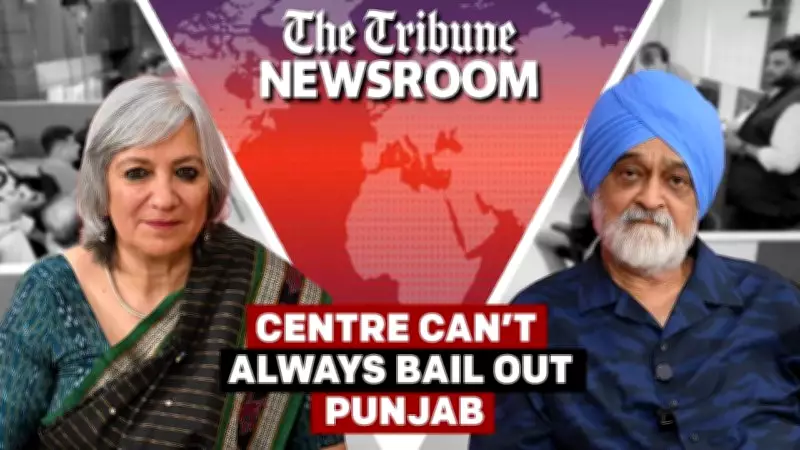
Former Planning Commission Deputy Chairman Montek Singh Ahluwalia has described the three farm laws enacted by the Narendra Modi government in 2020 as good in intent but flawed in execution due to a lack of consultation and rushed passage. In an interview with The Tribune Newsroom, the economist and former civil servant stated that the laws were eventually repealed after widespread farmer protests.
Ahluwalia’s assessment of the farm laws
Ahluwalia, who served as Finance Secretary and Commerce Secretary, and was a key architect of the 1991 economic reforms alongside then Finance Minister Manmohan Singh, said the farm laws aimed to liberalize agricultural markets and give farmers more freedom to sell produce outside government-regulated mandis. However, he noted that the government did not build sufficient consensus or address concerns raised by farmer unions and state governments.
“The farm laws were good in their intent, but they were rushed through without proper consultation. That is why they faced such strong opposition and had to be withdrawn,” Ahluwalia said during the interview with Editor-in-Chief Jyoti Malhotra.

Context of the farm laws
The three laws—the Farmers’ Produce Trade and Commerce (Promotion and Facilitation) Act, the Farmers (Empowerment and Protection) Agreement on Price Assurance and Farm Services Act, and the Essential Commodities (Amendment) Act—were passed by Parliament in September 2020. They were intended to allow farmers to sell produce anywhere in the country, enter into contract farming, and relax stockholding limits for commodities. However, farmer unions argued that the laws would dismantle the minimum support price (MSP) system and leave small farmers vulnerable to corporate exploitation.
Protests erupted at Delhi’s borders from November 2020, lasting over a year. In November 2021, Prime Minister Narendra Modi announced the repeal of the three laws, which was formalized in Parliament in December 2021.
Ahluwalia’s role in Punjab
Ahluwalia also recalled his involvement in Punjab’s economic revival. In 2020, then Chief Minister Captain Amarinder Singh appointed him to lead a group of experts tasked with revitalizing the state’s economy. The panel submitted a report recommending reforms in agriculture, industry, and fiscal management. Ahluwalia emphasized that agricultural reform remains essential for India’s growth but must be implemented with careful deliberation and stakeholder engagement.
“Reforms are necessary, but they need to be done in a way that addresses the fears of those affected. The farm laws experience is a lesson in how not to push through major policy changes,” he added.
Broader economic challenges
During the interview, Ahluwalia touched on other critical aspects of the Indian economy, including the need for job creation, investment in infrastructure, and fiscal discipline. He stressed that India’s demographic dividend could turn into a liability if adequate employment opportunities are not generated. He also called for greater private sector participation in agriculture and allied sectors to boost productivity and farmer incomes.
Ahluwalia’s comments come at a time when the government is focusing on doubling farmers’ income and promoting agri-tech startups. The repeal of the farm laws, however, has left a policy vacuum that successive governments have struggled to fill.






