BJP Yuva Morcha Activists Stage Protest in Jammu, Demand Rahul Gandhi's Apology
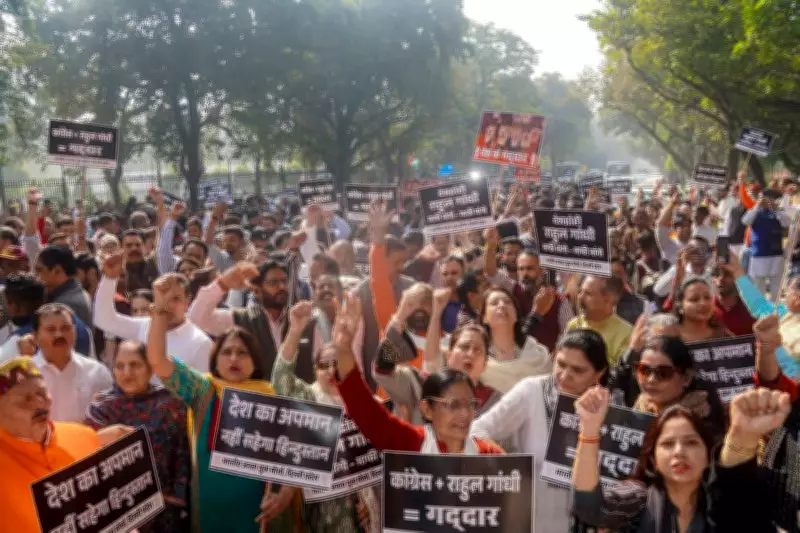
In a significant political development, members of the Bharatiya Janata Party's youth wing, the Yuva Morcha, organized a protest demonstration in Jammu. The activists gathered to voice their strong opposition and demand a formal apology from Congress leader Rahul Gandhi. This call for an apology stems from an incident where Gandhi engaged in a shirtless protest during a recent artificial intelligence summit, an act that has sparked widespread controversy and criticism.
Protest Details and Demands
The protest, held at a prominent location in Jammu, saw a sizable turnout of Yuva Morcha members who carried placards and raised slogans against Rahul Gandhi. The core demand was clear: an immediate and unconditional apology from the Congress leader for his actions at the AI summit. Protesters argued that Gandhi's behavior was not only inappropriate for a political figure but also disrespectful to the dignity of the nation and the seriousness of the summit's discussions on technology and innovation.
According to reports from the scene, the demonstrators emphasized that such conduct undermines the decorum expected in political discourse and public events. They highlighted that the AI summit was a platform for serious dialogue on critical technological advancements, and Gandhi's protest diverted attention from substantive issues to personal theatrics.

Background of the AI Summit Incident
The controversy originated when Rahul Gandhi, during the artificial intelligence summit, removed his shirt as part of a protest gesture. This act was reportedly intended to draw attention to certain political or social issues, but it quickly drew backlash from various quarters. Critics, including the BJP Yuva Morcha, labeled it as undignified and unbecoming of a national leader, arguing that it trivialized important forums and set a poor example for public conduct.
The incident has since become a focal point in political debates, with many questioning the appropriateness of such methods in political activism. Supporters of Gandhi have defended the action as a form of symbolic protest, but opponents insist it crossed lines of propriety and respect for institutional settings.
Political Reactions and Implications
The protest in Jammu reflects broader political tensions between the BJP and Congress, especially in the context of Jammu and Kashmir's political landscape. Yuva Morcha leaders at the protest stated that Gandhi's actions were an insult to the people of India and demanded accountability. They called on the Congress party to rein in its leaders and ensure that political expressions do not devolve into what they termed as 'cheap stunts'.
This event is part of a larger pattern of political confrontations, where both parties often clash over issues of decorum and national image. The demand for an apology is seen as a strategic move to pressure the opposition and highlight perceived lapses in leadership behavior.
Public and Media Response
Media coverage of the protest has been extensive, with many outlets highlighting the Yuva Morcha's firm stance. Public opinion appears divided, with some supporting the call for an apology as a matter of upholding political standards, while others view it as a political maneuver to distract from substantive policy discussions.
The incident at the AI summit and the subsequent protest have sparked discussions on:
- The boundaries of political protest in formal settings.
- The role of youth wings in shaping political narratives.
- The impact of such controversies on public perception of political parties.
As the situation unfolds, it remains to be seen whether Rahul Gandhi or the Congress party will respond to the demands for an apology. For now, the BJP Yuva Morcha's protest in Jammu stands as a clear statement of their position, emphasizing their commitment to what they describe as dignified and respectful political engagement.