Congress Launches Scathing Attack on Modi's Israel Policy
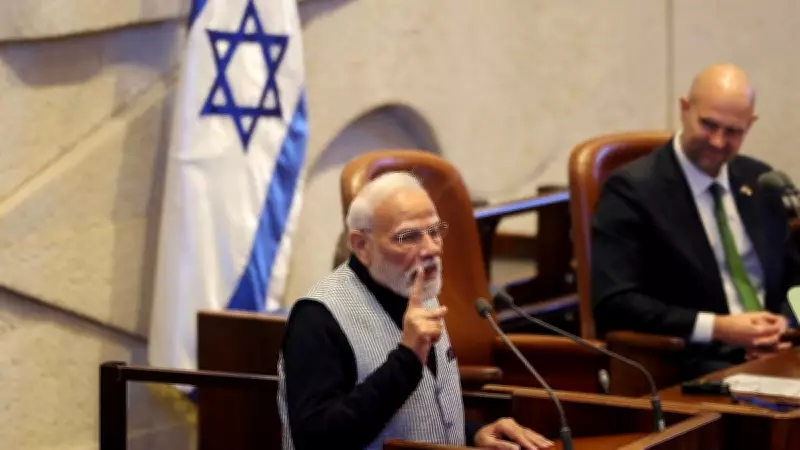
The Congress party has mounted a fierce political offensive against Prime Minister Narendra Modi, accusing him of an "unabashed defence of the host" in his approach to Israel. This criticism comes amid ongoing tensions in the region, with the opposition seeking to frame the government's foreign policy as overly aligned with Israeli interests.
Historical Echoes: Nehru's 1947 Stance Revived
In a strategic move, the Congress has resurrected the historical perspective of India's first Prime Minister, Jawaharlal Nehru, from July 1947. At that time, Nehru responded to a letter from renowned physicist Albert Einstein concerning the creation of Israel. The party highlighted this episode to contrast what they perceive as Modi's current pro-Israel stance with Nehru's more nuanced or cautious position during the formative years of the Israeli state.
By invoking Nehru's legacy, the Congress aims to underscore a continuity in India's traditional foreign policy approach, which they argue has been disrupted under the Modi administration. This revival of historical context adds depth to the political discourse, linking contemporary issues to foundational principles from India's early post-independence era.

Political Implications and Broader Debate
The attack signals a renewed focus on foreign policy as a battleground in Indian politics, with the Congress leveraging historical figures to challenge the ruling party's credibility. This move is part of a broader strategy to question the government's alignment on international matters, particularly in sensitive regions like the Middle East.
As the debate unfolds, it raises questions about India's evolving role on the global stage and the balance between historical precedents and current geopolitical realities. The Congress's critique is likely to fuel further discussions in political circles and among analysts, shaping public perception ahead of future electoral contests.