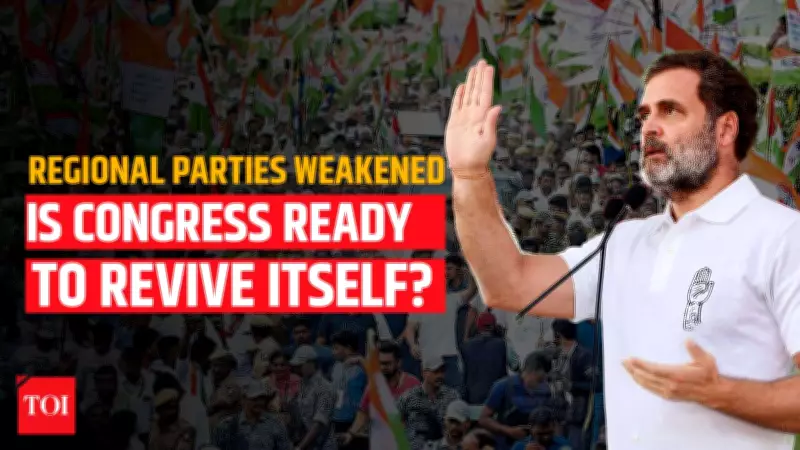
Just two years ago, Congress struggled to assert leadership inside the INDIA bloc as powerful regional leaders refused to play second fiddle. But after major defeats suffered by Arvind Kejriwal, Mamata Banerjee and MK Stalin, the opposition landscape looks dramatically different in 2026. Has Congress finally emerged as the undisputed face of the opposition? Or does the BJP continue benefiting whenever regional parties weaken? This article explores the uneasy history between Congress and its allies, the shifting balance of power inside the INDIA bloc and the unanswered questions shaping opposition politics ahead.
The Collapse of Regional Strongholds
The recent electoral setbacks for key regional parties have reshaped India's opposition. Arvind Kejriwal's Aam Aadmi Party, once a rising force, suffered a major defeat in Delhi, significantly reducing its influence. Similarly, Mamata Banerjee's Trinamool Congress and MK Stalin's DMK faced unexpected losses in their respective states. These outcomes have weakened the regional voices that previously challenged Congress's dominance within the opposition alliance.
Congress's Strategic Pivot
Congress has capitalized on this power vacuum. The party has increasingly positioned itself as the central opposition force, leading negotiations and setting the agenda within the INDIA bloc. Senior Congress leaders have been more vocal in criticizing the BJP, while regional allies have become more accommodative. This marks a significant shift from the earlier dynamic where Congress was often sidelined by more assertive regional partners.

BJP's Calculated Advantage
However, the decline of regional parties may also benefit the BJP. Historically, a fragmented opposition has helped the BJP consolidate power. With fewer strong regional challengers, the BJP could find it easier to win seats in states where regional parties once dominated. This dual-edged sword raises questions about whether Congress's resurgence truly threatens the BJP's electoral machinery.
Unanswered Questions Ahead
The future of opposition politics remains uncertain. Can Congress maintain its leadership without alienating regional allies? Will the BJP exploit the weakened regional parties to expand its footprint? And how will voters respond to a more centralized opposition? These questions will define the political landscape in the lead-up to the next general elections.