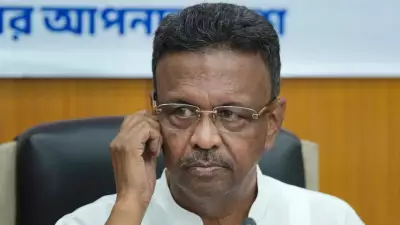
The recent Rajya Sabha elections in Jharkhand and the Legislative Council polls in Karnataka shared a common feature: cross-voting that disrupted the numerical calculations on both sides of the political spectrum. While the Congress-led INDIA bloc suffered a setback in Jharkhand, the formidable BJP-led NDA also faced losses in Karnataka.
Jharkhand Rajya Sabha Elections
In Jharkhand, the BJP-led NDA had 24 MLAs but managed to secure the backing of 30 legislators for Parimal Nathwani, the Independent candidate it supported. The INDIA bloc, on the other hand, had 56 votes, enough to win two seats. However, the Congress candidate could only muster 20 votes, eight fewer than expected, resulting in a loss.
Karnataka Legislative Council Polls
In Karnataka, the Congress, with 135 MLAs, polled 151 votes in the MLC elections. The BJP had 64 MLAs, but its two candidates together secured only 56 votes, a shortfall of eight. The BJP's ally, the JD(S), had 18 MLAs, but its candidate received just 14 votes.

Thus, while the NDA turned the tables on the INDIA bloc in Jharkhand and won an extra Rajya Sabha seat, the Congress outmaneuvered the BJP in Karnataka to defeat the JD(S) candidate in the state council elections. Ironically, both parties hailed the cross-voters from rivals while targeting their own. The BJP praised the conscience vote in Jharkhand but initiated a probe in Karnataka to identify those who defected. Similarly, the Congress slammed the BJP for using money power in Jharkhand to lure cross-voters but lauded the conscience vote in Karnataka.
Political Reactions
Karnataka Chief Minister D K Shivakumar stated that the result demonstrated confidence in the Congress government and thanked legislators who backed the party across political lines. In Jharkhand, BJP leaders called the result a reflection of public confidence in the NDA's developmental agenda.
Clearly, for both the Congress and the BJP, when rival party MLAs cross-vote, it is hailed as a "conscience vote," but when their own MLAs cross-vote, they are labeled as betrayers.
Historical Context of Cross-Voting
Cross-voting has been a persistent issue in Rajya Sabha and legislative council elections for decades. These houses were created to provide experienced individuals of integrity an opportunity to participate in governance without contesting Lok Sabha or assembly elections. However, the secret ballot process became a tool for alleged money and power influence during voting, leading to demands for abolition.
In 1973, senior Congress MP Bibhuti Mishra introduced a Private Member's Bill in Lok Sabha to abolish the Rajya Sabha, citing corruption in elections. That move was rejected. Later, an Ethics Committee of Parliament headed by S B Chavan, in a report adopted on December 15, 1999, suggested open ballot for these elections. The report noted the emerging trend of cross-voting and alleged that large sums of money and other considerations influenced voting behavior, sometimes leading to the defeat of official candidates from the same party. The committee recommended examining the possibility of open ballot to prevent mischief in the electoral process.
Open Ballot System
The NDA government successfully pushed a bill to amend the Representation of People Act in 2003, introducing the "Open Ballot" system for voting. Under this process, an MP or MLA must show their ballot paper to authorized agents of the political party for verification before inserting it into the ballot box. If they refuse, the vote is invalidated. The Supreme Court upheld this amendment.
However, the amendment has done little to stop allegations of money and muscle power in these elections or prevent cross-voting. Hundreds of legislators have entered Rajya Sabha and state councils with the help of cross-voting from rivals. Clearly, all political parties are guilty of double standards on this issue. They condemn cross-voting when it harms them and celebrate it as a conscience vote when it benefits them. Ultimately, it is about power dynamics, not party politics.