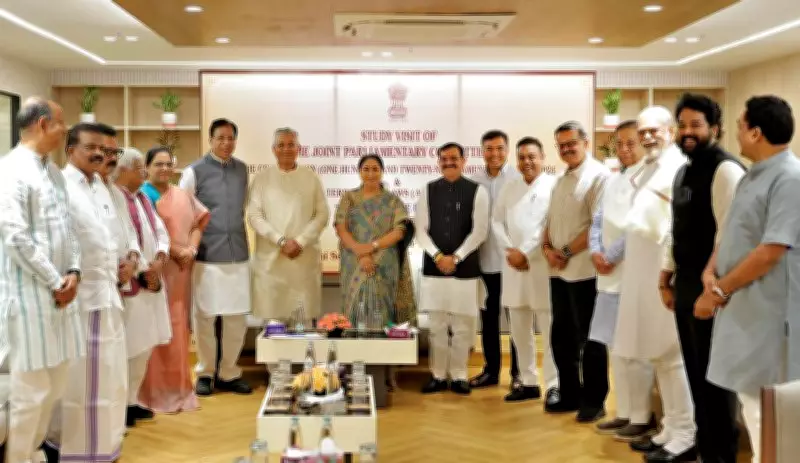
The Joint Parliamentary Committee (JPC) examining the proposed 'One Nation, One Election' Bills on Wednesday held consultations with Delhi Chief Minister Rekha Gupta and Delhi Assembly Speaker Vijender Gupta. Both leaders expressed support for the proposal while emphasizing the need for constitutional safeguards and a broad-based consensus.
CM Gupta: Simultaneous Elections Are the Need of the Hour
During a meeting at the Delhi Secretariat, CM Gupta described simultaneous Lok Sabha and Assembly elections as 'the need of the hour', stating they would save time, resources, and reduce disruptions caused by the frequent enforcement of the Model Code of Conduct. She noted that repeated elections keep the administrative machinery occupied, delay development works, and affect public services.
Referring to Delhi's experience, CM Gupta pointed out that the Assembly elections were held roughly a year after the Lok Sabha polls. She indicated that the government was willing to consider a suitable adjustment in the Assembly's tenure, if required, in the national interest to align the electoral cycle. The CM also informed the committee that the government would submit detailed written suggestions after examining the constitutional, legal, and administrative aspects of the proposed reforms.

Speaker Vijender Gupta Calls for Consensus-Based Approach
Later, during the committee's visit to the Delhi Legislative Assembly, Speaker Vijender Gupta called for a consensus-based approach to the proposed reforms. He noted that simultaneous elections were the norm in the years immediately after Independence, but political developments and premature dissolution of legislatures eventually led to staggered electoral cycles. He emphasized that frequent elections impose significant administrative and financial costs.
The JPC, headed by PP Chaudhary, is examining the Constitution (129th Amendment) Bill, 2024, and the Union Territories Laws (Amendment) Bill, 2024. The committee is consulting states and stakeholders before finalizing its recommendations. The consultations with Delhi are part of this broader effort to gather input from various regions and political entities.
Implications and Next Steps
The 'One Nation, One Election' proposal aims to synchronize the electoral cycles of the Lok Sabha and state assemblies to reduce the frequency of elections. Proponents argue that this would lead to significant savings in time and money, as well as minimize the disruption to governance caused by the Model Code of Conduct. Critics, however, raise concerns about the feasibility of such a system given the diverse political landscape and the potential for undermining federal principles.
The JPC is expected to continue its consultations with other states and stakeholders in the coming weeks. The committee's recommendations will be crucial in shaping the final legislation, which will require broad parliamentary approval. The support from Delhi's leadership adds momentum to the proposal, but the emphasis on constitutional safeguards and consensus indicates that the path forward may involve careful negotiations and amendments.