

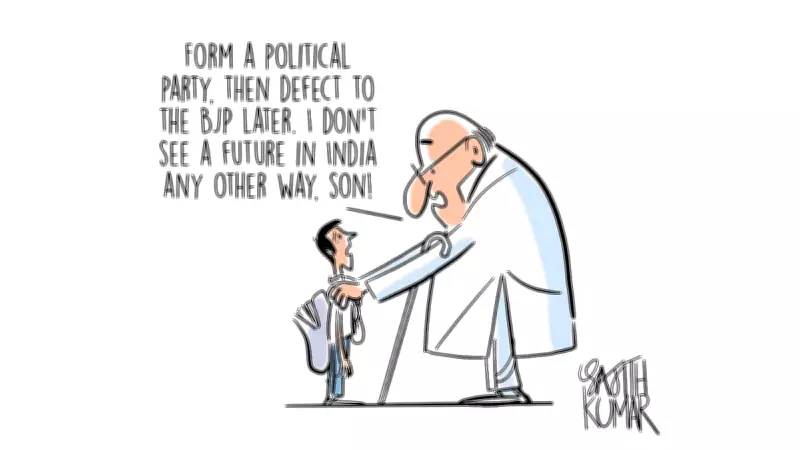
A recent cartoon published by Deccan Herald captures a poignant sentiment among India's youth: the feeling that there is no future in the country. The illustration depicts a young individual looking at a map of India with a dejected expression, while a thought bubble reads, "I don't see a future in India." This visual commentary reflects a growing concern about limited opportunities, unemployment, and the allure of better prospects abroad.
The Context of the Cartoon
The cartoon taps into a broader narrative that has been gaining traction in public discourse. Many young Indians, particularly those in the workforce or approaching it, express frustration with the job market, educational system, and economic conditions. The sentiment is not new but has been amplified by recent economic challenges and global competition.
Underlying Issues
Several factors contribute to this outlook. High unemployment rates, especially among educated youth, are a primary concern. The mismatch between the skills taught in educational institutions and the demands of the job market exacerbates the problem. Additionally, bureaucratic hurdles, corruption, and a perceived lack of innovation-friendly policies can make India seem less attractive for career growth.

The Brain Drain Phenomenon
This cartoon also highlights the ongoing brain drain, where talented individuals seek opportunities in countries like the United States, Canada, Australia, and Europe. The lure of better salaries, quality of life, and professional growth often outweighs the attachment to one's homeland. While some eventually return, many choose to settle abroad permanently.
Government and Policy Responses
The government has launched various initiatives to address these issues, such as skill development programs, startup incentives, and efforts to improve ease of doing business. However, critics argue that these measures have not yet yielded significant results on the ground. The cartoon serves as a reminder that policy changes need to be more effective and reach the grassroots level.
Societal Implications
The feeling of having no future can have profound effects on mental health and social stability. It can lead to apathy, reduced productivity, and even social unrest. On a positive note, it also drives entrepreneurship and innovation, as some individuals create their own opportunities rather than waiting for them.
Conclusion
The Deccan Herald cartoon is a stark representation of a sentiment that resonates with many. While it is a simplified view of a complex issue, it effectively communicates the frustration and disillusionment felt by a segment of India's youth. Addressing this requires a multi-faceted approach involving education reform, economic policy adjustments, and a cultural shift towards valuing diverse career paths. Only then can the narrative shift from one of hopelessness to one of opportunity and growth within India.






