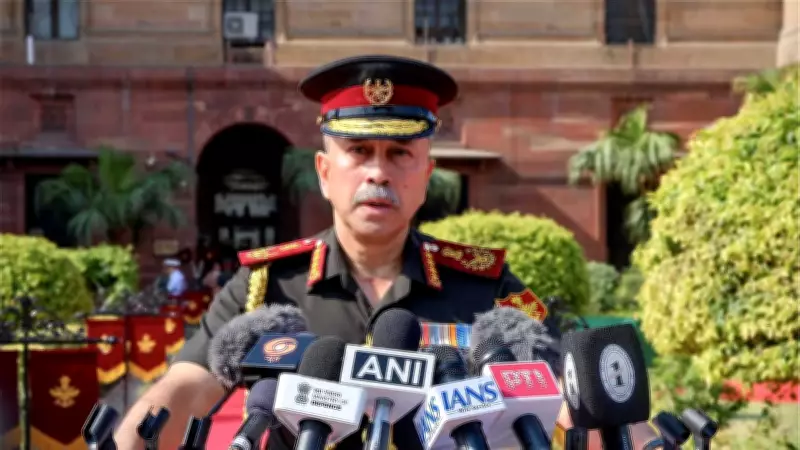
General NS Raja Subramani has formally assumed charge as India's new Chief of Defence Staff (CDS), succeeding General Anil Chauhan. The transition marks a significant moment in India's military leadership, with the new CDS set to steer major reforms aimed at strengthening the nation's future warfighting capabilities and national security framework.
Key Priorities Outlined
In his first statement after taking office, General Subramani highlighted several key priorities. These include military transformation, tri-services integration, theatreisation, and the enhancement of indigenous defence capabilities. His vision aligns with the ongoing efforts to modernize the Indian armed forces and ensure they are prepared for future challenges.
Military Transformation and Tri-Services Integration
The new CDS emphasized the importance of military transformation to adapt to evolving threats. Tri-services integration is a crucial component, aiming to foster greater coordination and synergy among the Army, Navy, and Air Force. Theatreisation, which involves the creation of integrated theatre commands, is expected to streamline command structures and improve operational efficiency.

Indigenous Defence Capabilities
General Subramani also stressed the need to bolster indigenous defence capabilities. This includes promoting self-reliance in defence production and reducing dependence on foreign imports. The focus on 'Make in India' in the defence sector aligns with the government's broader vision of achieving strategic autonomy.
As the new CDS, General NS Raja Subramani is expected to play a pivotal role in shaping India's defence policies and ensuring the armed forces are equipped to safeguard national interests in an increasingly complex geopolitical environment.