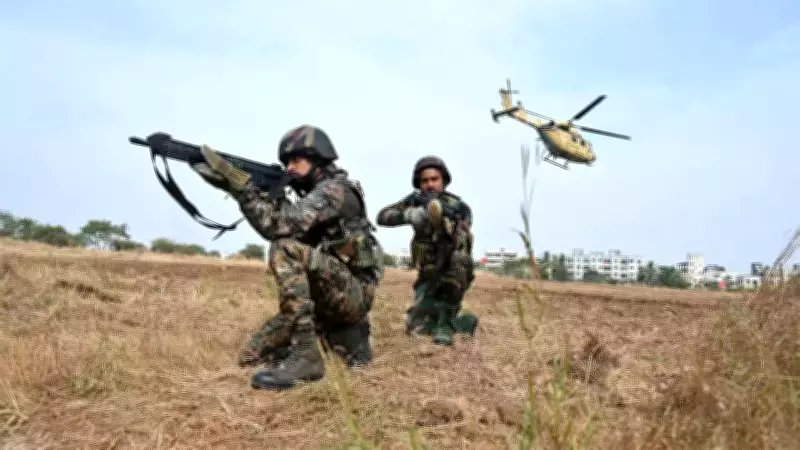
Indian Army Fully Prepared for Future Contingencies, Undeterred by Pakistan's Nuclear Threats
Western Army Commander Lt Gen Manoj Kumar Katiyar declared on Thursday that the Indian Army is fully prepared for future contingencies and will not be deterred by Pakistan's nuclear threats. He warned that any future conflict would end with a decisive outcome on the ground, emphasizing India's enhanced readiness and strategic planning.
Pakistan's Nuclear Threats and Ceasefire During Operation Sindoor
Addressing troops after an investiture ceremony at Dhyan Singh Stadium in Mamoon Military Station, Lt Gen Katiyar revealed that Pakistan had sought a ceasefire during Operation Sindoor while simultaneously issuing nuclear threats. "They said if they go down, they will take half the world with them. We ignored those threats then, and we are even better prepared now, with a clear plan for the future," he was quoted as saying by news agency PTI. This statement underscores India's resilience and advanced preparedness in the face of adversarial posturing.
Critique of Pakistan's Military Leadership and Proxy Warfare
Lt Gen Katiyar called out Pakistan's military leadership for sustaining a "war-like situation" to remain relevant domestically. He contrasted this with India's focus on national development, stating that Pakistan's generals are driven by the need to retain power. "Pakistan lacks the courage and capability for open combat and instead relies on proxy warfare to provoke escalation," he said. He accused Islamabad of repeatedly using terrorist outfits to provoke India, aiming to project a war-like situation and rally domestic support when India retaliates.

- Pakistan misleads its own people with false narratives of victory and media propaganda.
- India's leadership prioritizes development over militaristic posturing.
- Proxy warfare is a key tactic used by Pakistan to avoid direct confrontation.
Future Operations and Decisive Ground Victory
The commander stressed that future operations would go beyond targeting bases and posts. "Our victory will be on the ground and so decisive that they will be forced to accept defeat before the world," he asserted. This indicates a shift towards more comprehensive and impactful military strategies aimed at ensuring undeniable outcomes in any potential conflict.
Role of Western Command and Troop Preparedness
Underscoring the critical role of Western Command formations, Lt Gen Katiyar told troops that their preparedness would be vital in any future action. "You must be ready to enter enemy territory, seize key areas and inflict damage, while also protecting Jammu and Punjab," he said. He added that the nation's expectations demand peak operational readiness, highlighting the importance of proactive defense measures.
- Troops must be prepared for offensive and defensive operations.
- Western Command plays a pivotal role in safeguarding border regions.
- Operational readiness is essential to meet national security demands.
Deterrence and Lessons from Past Conflicts
Lt Gen Katiyar emphasized that India's preparedness should serve as a strong deterrent. "Our readiness must make the enemy think ten times before any misadventure," he stated. He noted that the danger has not diminished, and India's response must be stronger than before. Reflecting on history, he pointed out that Pakistan has failed to learn from past conflicts, including the 1971 war and the Kargil conflict, suggesting a pattern of unheeded lessons.
In summary, the Indian Army's unwavering readiness and strategic advancements position it to counter any threats decisively, with a focus on ground-level victories and robust deterrence against adversarial actions.