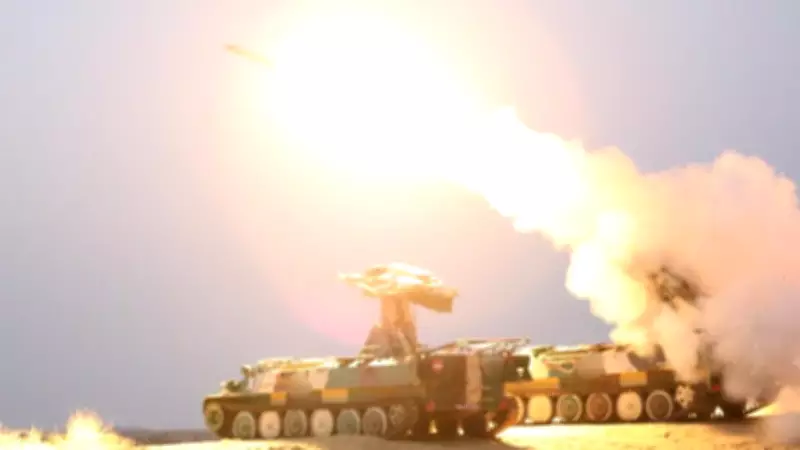
Indian Army's Desert Warriors Showcase Air Defence Prowess with Strela-10 Test Firing
In a powerful demonstration of combat readiness, the Indian Army's Konark Corps conducted a high-intensity test firing of the Strela-10 Very Short Range Air Defence System (VSHORADS) at the Pokhran Field Firing Range in Rajasthan's desert sector on Thursday. The exercise, executed by the Air Defence Warriors of the Blazing Skies Brigade, showcased exceptional operational precision and tactical proficiency in neutralizing low-altitude aerial threats.
Precision Strikes in Challenging Desert Terrain
The live firing exercise featured the Strela-10 surface-to-air missile system, which boasts an effective engagement range of approximately 6 to 10 kilometres. Launched from a BMP-based mobile platform, the missile achieved direct hits on simulated enemy targets, underlining the system's remarkable accuracy and lethal capabilities even in the demanding desert environment.
Defence officials emphasized that the primary objectives of the exercise included validating firing standards, sharpening crew coordination, and testing engagement protocols under realistic battlefield conditions. The drill successfully highlighted seamless integration between surveillance systems, target acquisition units, and missile deployment teams.

Specialized Capabilities of the Strela-10 System
The Strela-10 represents a highly mobile short-range air defence system originally designed by Soviet engineers. Unlike many radar-dependent systems, this platform relies significantly on visual target acquisition, making crew training and battlefield awareness absolutely critical components of its operational success.
This system is primarily designed to engage low-flying aircraft, helicopters, and increasingly relevant modern threats such as drones. The desert environment of Rajasthan, characterized by high temperatures, shifting sands, and extended visibility ranges, provided an ideal but demanding backdrop for validating these specialized air defence capabilities.
Strategic Significance and Future Developments
Military officials stressed that such exercises are routinely conducted to maintain peak operational preparedness, particularly in strategically significant sectors like the desert frontier. The successful firing reinforced the Indian Army's proven ability to safeguard national airspace against emerging aerial threats with precision and determination.
While the Strela-10 system continues to serve actively within India's defence arsenal, the nation is simultaneously advancing indigenous air defence capabilities. This includes the ongoing development of a homegrown Very Short Range Air Defence System (VSHORADS) with an approximate 6 kilometre engagement range.
The Konark Corps formation demonstrated exceptional fire discipline and tactical proficiency throughout the exercise. This powerful display of precision, grit, and air dominance reaffirmed that India's Desert Warriors remain battle-ready, mission-focused, and fully prepared to secure the nation's skies against any potential threat.