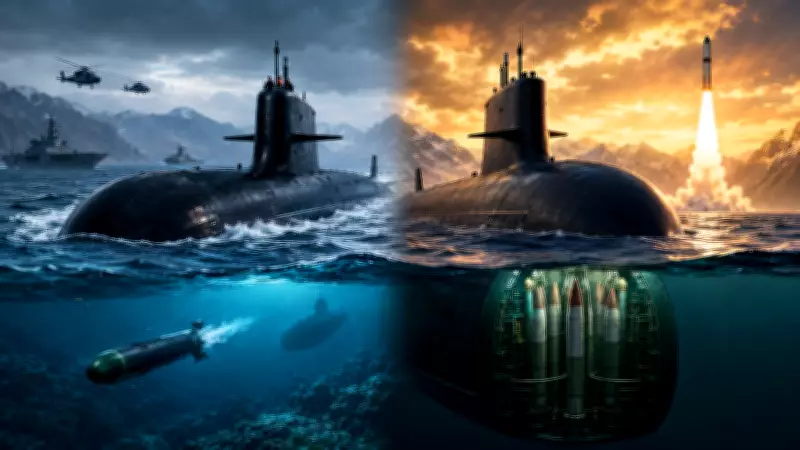
India currently operates nuclear-powered ballistic missile submarines (SSBNs) as part of its nuclear deterrent, but it does not yet have an indigenous fleet of nuclear-powered attack submarines (SSNs). This distinction is critical for understanding the country's naval capabilities and future plans.
Defining SSNs and SSBNs
Both SSNs and SSBNs use nuclear reactors for propulsion, allowing them to remain submerged for months. However, their missions differ fundamentally. An SSN, or nuclear-powered attack submarine, is designed to hunt enemy submarines and warships, gather intelligence, escort carrier groups, and conduct conventional strikes. In contrast, an SSBN, or nuclear-powered ballistic missile submarine, carries nuclear-tipped ballistic missiles to provide a second-strike capability, ensuring retaliation even after a surprise attack.
The designation system originates from the US Navy: the first "S" stands for submarine, the second "S" indicates nuclear propulsion, and the final letter defines the role—"N" for attack or "B" for ballistic missile.

India's Current SSBN Fleet
India operates the Arihant-class SSBNs, including INS Arihant (commissioned in 2016) and INS Arighat, with additional boats under construction. These submarines carry indigenous K-series submarine-launched ballistic missiles, such as the K-15 and K-4, and are tasked with strategic nuclear deterrence. According to the Times of India, this capability completed India's nuclear triad, which includes land-based missiles, aircraft-delivered weapons, and sea-based systems.
SSBNs are considered the crown jewels of deterrence because they are highly survivable. Unlike fixed missile silos or airfields, they can hide in vast ocean areas, making them difficult to detect and destroy. A single SSBN can remain submerged for months while carrying enough warheads to inflict devastating damage.
India's Lack of Indigenous SSNs
Despite having SSBNs, India does not operate an indigenous SSN fleet. The Indian Navy has leased Russian SSNs, such as INS Chakra, for operational experience, but these are not domestically built. India has approved plans to construct indigenous SSNs, with multiple boats expected under a long-term programme. These submarines are intended to operate across the Indian Ocean Region, monitor Chinese naval activity, protect carrier battle groups, and escort Indian SSBNs during patrols.
Until these submarines enter service, India remains one of the few major nuclear powers with an SSBN fleet but without an operational indigenous SSN force.
Why India Needs Both
SSBNs provide nuclear deterrence but require protection from enemy attack submarines that seek to track them. SSNs act as a shield, escorting SSBNs, hunting adversary submarines, and securing maritime approaches. As China's naval presence expands in the Indian Ocean, Indian planners view SSNs as essential for maintaining undersea dominance. The future strategy aims to field both strong SSBN and SSN fleets, similar to the United States, Russia, China, Britain, and France.
In summary, an SSBN is a strategic deterrent platform, while an SSN is a versatile hunter. India already has the former but is working towards the latter.