

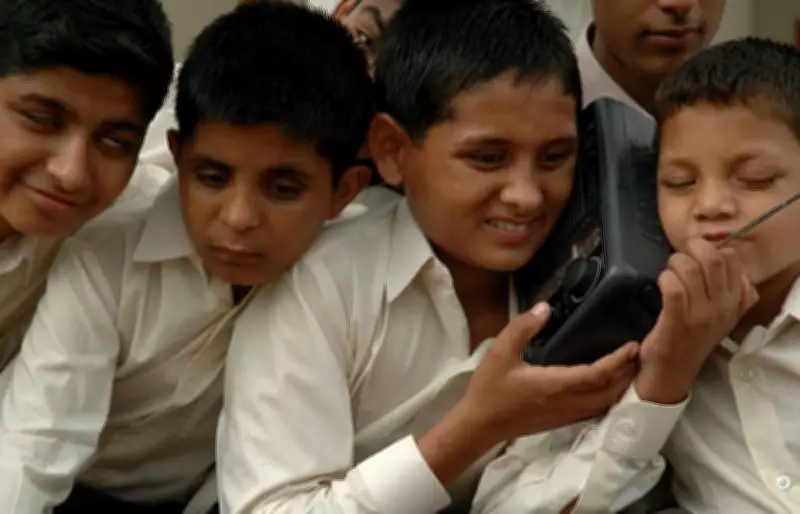
India's radio industry, which reaches 40 crore listeners daily, does not need rescue but a regulatory environment that reflects its current capabilities, according to Nisha Narayanan, a media veteran with 33 years of experience who helped build Red FM's network over nearly two decades.
Radio's Enduring Reach and Trust
Radio remains the most trusted voice for local communities, from auto drivers in Jaipur to homemakers in Coimbatore and kirana store owners in Nagpur. During crises such as cyclones and floods, radio serves as a lifeline. During Operation Sindoor, disaster preparedness guidelines recommended keeping a radio set in emergency kits, highlighting its reliability when other networks fail.
Global Context: Radio's Resilience
In the US, radio continues to dominate audio despite streaming growth. According to Nielsen and Edison Research, US listeners gave 67% of their daily ad-supported audio time to radio in 2024, compared to 19% for podcasts. Even among adults aged 18-34, radio accounted for more than half of daily ad-supported listening time by late 2024.

India's Radio Landscape: Numbers and Challenges
India had approximately 1,510 operational radio stations in 2025, with over 12,700 brands advertising on the medium. However, total radio revenues are projected to decline to Rs 22 billion by 2028, down from Rs 25 billion in 2024. Major brands like Big FM, Ishq FM, Radio One, and Radio Nasha have recently shut down, and Red FM surrendered Magic FM earlier this year. These exits are not failures of creativity but the result of a cost structure calibrated to 2015 revenue projections meeting a 2025 market reality.
Key Policy Recommendations
The Ministry of Information and Broadcasting's draft Telecommunications Rules 2026 present a pivotal moment. Switching to a revenue-linked model, where operators pay a fair percentage of earnings rather than an arbitrary fee bid a decade ago, would provide meaningful financial relief. This recommendation must be implemented immediately.
However, the draft also mandates one hour of daily government-directed public service programming for private FM stations. This contradicts economic reality, as government advertising has been declining year-on-year. Forcing stations to give up commercial inventory for unpaid content compounds already compressed margins.
Other Critical Fixes
- Smartphone FM chip activation: India has over 700 million active smartphone users, and almost every device has a built-in FM chip that manufacturers deliberately disable. Unlocking it costs nothing and turns every phone into a life-saving tool during disasters.
- GST reduction: Lowering the 18% GST on radio ads to 5% to match other media formats.
- End co-location mandate: The ongoing mandate with Prasar Bharati imposes unfair infrastructure costs on private operators with no equivalent in any other media sector.
- Allow independent news: Every other platform, including satellite TV, DTH, and internet media, reports news freely. Allowing local news would redefine radio as essential civic infrastructure during emergencies, elections, and public health crises.
Radio's Adaptation and Asymmetry
Digital giants like Spotify, JioSaavn, and YouTube Music operate in India without spectrum license fees, content restrictions, or public service obligations. Private FM operates on government-issued licenses and pays fixed spectrum-linked costs regardless of revenue. Despite this, radio brands have evolved into 360-degree media companies, with non-traditional revenues (live events, branded content, cultural IPs, digital content) reaching 25% of total revenues in 2025, exceeding 30% for some operators.

Radio's Role for Independent Artists and Local Talent
Radio remains a premier platform for independent artists. The Radio Jockey is now a powerful local influencer, creating digital content, hosting live events, and building hyper-local communities. Private FM has created a genuine professional pathway for youth and young women in tier-2 and tier-3 cities. A young woman in Jabalpur, Indore, or Nagpur can walk into a local station and become a broadcast professional. This ecosystem of RJs, sales teams, sound engineers, producers, and technicians is irreplaceable by any other employer in those markets.
Conclusion: Set Radio Free
For the government, implementing the revenue-linked fee framework, mandating smartphone FM chip activation, permitting independent news, revisiting mandatory programming burdens, and rationalizing GST require no public expenditure. For advertisers, radio offers hyper-local precision. The radio industry itself must remain clear-eyed about content credibility. Radio does not need to be rescued; it needs to be set free by a policy that reflects the present, ensuring India never loses a medium that speaks to its people before it speaks at them.





