

The Indian Space Research Organisation (ISRO) has appointed U P Rajeev as the new Director of the Vikram Sarabhai Space Centre (VSSC), effective immediately. Rajeev, a distinguished scientist with decades of experience in rocket control and guidance systems, has played a leading role in the mission design and simulation of several of ISRO’s major launch vehicle programmes.
Rajeev’s Background and Expertise
U P Rajeev previously served as the Deputy Director of the VSSC, where he oversaw the development of advanced control and guidance systems for launch vehicles. His expertise includes designing mission profiles and simulating flight trajectories for the Polar Satellite Launch Vehicle (PSLV), Geosynchronous Satellite Launch Vehicle (GSLV), and the heavy-lift Launch Vehicle Mark-3 (LVM3). According to ISRO officials, Rajeev’s contributions have been critical to the success of recent missions, including the Chandrayaan-3 lunar landing and the Aditya-L1 solar observatory.
Impact on ISRO’s Future Missions
As VSSC Director, Rajeev will lead the centre’s efforts in developing next-generation launch vehicles, including the Next Generation Launch Vehicle (NGLV) and the human-rated LVM3 for the Gaganyaan programme. He will also oversee upgrades to the existing PSLV and GSLV families. “U P Rajeev’s deep understanding of mission design and simulation will be invaluable as we aim for more complex and ambitious missions,” said an ISRO spokesperson.

Rajeev succeeds Dr. S. Unnikrishnan Nair, who completed his tenure at VSSC. Nair had led the centre during a period of record launches and the successful landing of Chandrayaan-3 on the Moon. Under his leadership, VSSC also achieved the first test flight of the reusable launch vehicle technology demonstrator (RLV-TD).
VSSC’s Role in India’s Space Programme
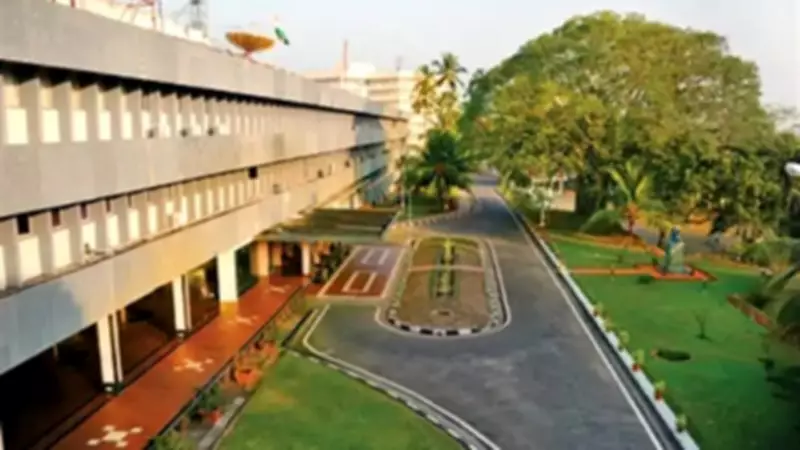
The Vikram Sarabhai Space Centre, located in Thiruvananthapuram, Kerala, is ISRO’s lead centre for launch vehicle development. It is responsible for the design, development, and testing of all ISRO launch vehicles and their subsystems. The centre also houses facilities for solid and liquid propulsion, advanced materials, and avionics. With Rajeev at the helm, VSSC is expected to accelerate work on the NGLV, which aims to increase payload capacity and reduce launch costs.






