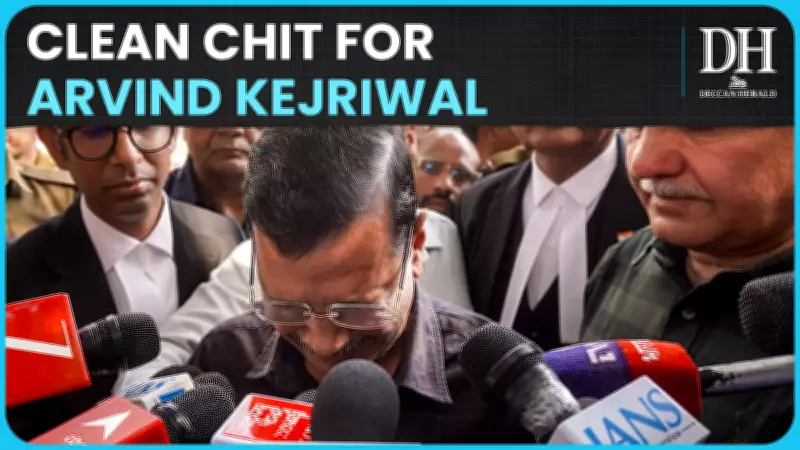
Arvind Kejriwal Exonerated in Delhi Liquor Policy Scam Probe
In a major development, Delhi Chief Minister and Aam Aadmi Party (AAP) leader Arvind Kejriwal has received a clean chit from the Enforcement Directorate (ED) in the high-profile liquor policy scam investigation. This decision comes after months of intense scrutiny and allegations of corruption surrounding the now-scrapped Delhi excise policy.
Details of the Investigation and Findings
The Enforcement Directorate, which is India's premier financial investigation agency, has concluded that there is insufficient evidence to directly implicate Kejriwal in the alleged irregularities. The probe focused on accusations that the Delhi government's 2021-22 excise policy favored certain liquor vendors and led to potential revenue losses for the state exchequer.
Key aspects of the investigation included:

- Allegations of policy manipulation to benefit private entities
- Claims of procedural violations in the formulation and implementation of the liquor policy
- Financial transactions and money trail analysis involving multiple stakeholders
Despite these serious allegations, the ED's findings indicate that Kejriwal's involvement could not be substantiated with concrete evidence. This represents a significant legal victory for the Delhi Chief Minister, who has consistently maintained his innocence throughout the investigation.
Political Implications and Reactions
The clean chit has immediate and far-reaching political consequences, particularly in the context of Delhi's governance and national politics. Kejriwal's AAP has positioned itself as an anti-corruption alternative to traditional political parties, making this exoneration particularly meaningful for the party's credibility.
Political analysts suggest this development could:
- Strengthen Kejriwal's position within Delhi's political landscape
- Potentially impact upcoming electoral calculations at both state and national levels
- Influence public perception of corruption allegations against sitting governments
The timing of this clearance is also noteworthy, coming amid ongoing political tensions between the AAP-led Delhi government and central authorities. Opposition parties have been quick to react, with some questioning the thoroughness of the investigation while others have welcomed the outcome as a vindication of due process.
Background of the Liquor Policy Controversy
The Delhi excise policy, introduced in 2021, aimed to reform the city's liquor distribution system but faced criticism almost immediately after implementation. Allegations emerged that the policy contained provisions that could potentially benefit certain private players at the expense of government revenue.
The controversy led to:
- The policy's eventual cancellation by the Delhi government
- Multiple investigations by different agencies including the CBI and ED
- Arrests of several officials and businessmen connected to the case
Throughout this period, Kejriwal maintained that the policy was designed with public welfare in mind and denied any personal wrongdoing. His administration argued that the policy aimed to curb the black market and increase government revenue through regulated distribution.
Legal and Investigative Context
The Enforcement Directorate's investigation into the liquor policy scam has been one of several high-profile probes into state government policies across India. The agency's mandate includes investigating money laundering and foreign exchange violations, making its findings particularly significant in cases involving alleged financial irregularities.
Important considerations in this case include:
- The evidentiary standards required for prosecution in financial crime cases
- The distinction between policy decisions and criminal intent
- The procedural aspects of how the investigation was conducted
Legal experts note that while the clean chit represents a significant development, the broader investigation into the liquor policy continues, with other individuals and entities still under scrutiny. The complexity of financial investigations means that conclusions about one individual don't necessarily reflect on the entire case.

This exoneration of Arvind Kejriwal in the Delhi liquor policy scam investigation marks a pivotal moment in both the legal proceedings and the political narrative surrounding the case. As the investigation continues into other aspects of the controversy, this development will undoubtedly shape discussions about governance, accountability, and political integrity in India's capital region.