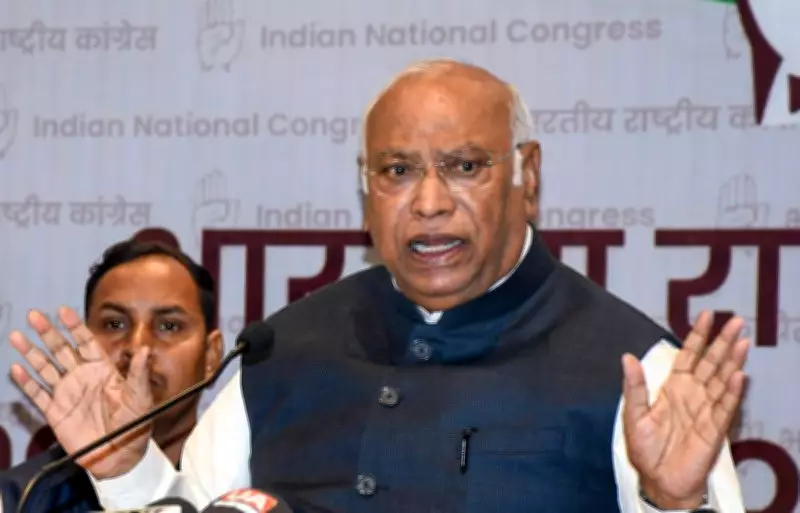
Kharge Raises Fuel Price Disparity in Parliament
Congress president Mallikarjun Kharge on Monday questioned the Narendra Modi-led government over persistently high petrol and diesel prices in India, even as global crude oil rates have witnessed a significant decline. Speaking in the Lok Sabha, Kharge pointed out that crude oil prices have dropped to $70.71 per barrel, yet Indian consumers continue to pay Rs 102.12 per litre for petrol and Rs 95.20 per litre for diesel.
"Today, crude oil prices have fallen to $70.71 per barrel. Then why is the Modi government selling petrol at Rs 102.12 per litre and diesel at Rs 95.20 per litre?" Kharge asked, demanding an explanation from the treasury benches. The Congress leader's remarks come amid growing public discontent over rising living costs and lack of relief on fuel prices.
Crude Oil Trends and Domestic Pricing
Global crude oil prices have softened over the past few months, dropping from over $80 per barrel in early 2026 to the current $70.71 per barrel level. This decline is attributed to easing geopolitical tensions in West Asia and lower demand projections from major economies. However, domestic fuel prices in India have remained largely unchanged, with petrol and diesel rates hovering near record highs.

According to data from the Indian Oil Corporation, the price of petrol in New Delhi stands at Rs 102.12 per litre, while diesel is priced at Rs 95.20 per litre. These rates include central excise duty, state VAT, and dealer commissions. The central government collects around Rs 32.90 per litre as excise duty on petrol and Rs 31.80 per litre on diesel, among the highest in the world.
LPG Price Hike Adds to Consumer Burden
Kharge also highlighted the recent increase in LPG cylinder prices, which have risen by Rs 50 per cylinder, further burdening households. "The Modi government has increased the price of LPG cylinders by Rs 50. This is adding to the inflation woes of common citizens," he said. The price of a 14.2-kg domestic LPG cylinder in Delhi is now Rs 1,003, up from Rs 953 earlier.
Opposition parties have been consistently demanding a reduction in excise duty on fuel to provide relief to consumers. In response, the government has maintained that it has already reduced excise duty on petrol and diesel in November 2021 and November 2022, and any further cut would impact fiscal revenues.
Political and Economic Implications
The issue of fuel prices is expected to be a major theme in the upcoming state elections due later this year. The Congress and other opposition parties have accused the Modi government of prioritizing fiscal consolidation over consumer welfare. "The government is earning record revenues from GST and direct taxes, yet it refuses to cut taxes on fuel. This is a clear case of profiteering at the expense of the common man," Kharge added.
Economists point out that while global crude prices have fallen, the rupee depreciation against the US dollar has partially offset the benefit. The Indian rupee has weakened from around Rs 75 to a dollar in early 2024 to nearly Rs 83 per dollar currently. This means that even if international crude prices decline, the cost of imported oil in rupee terms does not fall proportionately.
However, critics argue that the government has enough fiscal space to reduce excise duty, given the robust growth in tax collections. The central government's excise duty collection on petrol and diesel was estimated at over Rs 3.5 lakh crore in the current fiscal year.