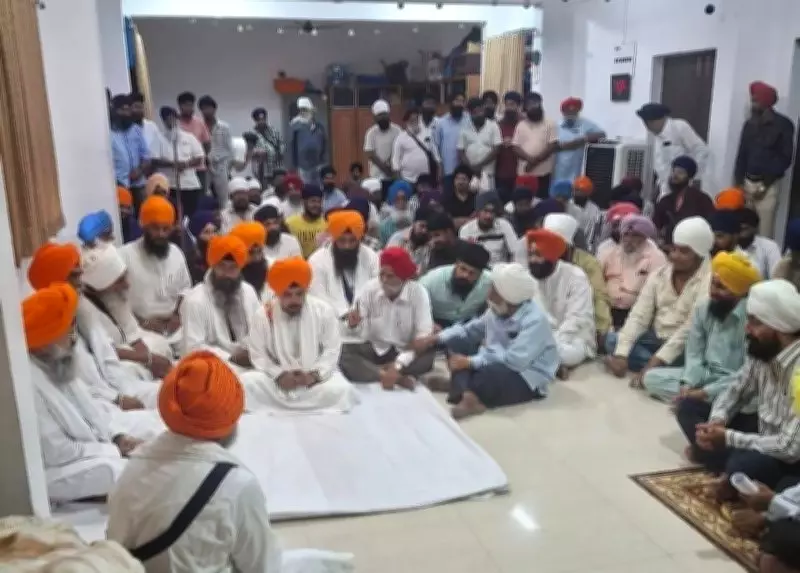
The Maharashtra government, led by Chief Minister Devendra Fadnavis, has proposed to repeal the Nanded Sikh Gurdwara Sachkhand Sri Hazur Abchalnagar Sahib Act, 1956, which governs the administrative affairs of Takht Hazur Sahib in Nanded. Sikh organisations and community members are fiercely opposing the move, viewing it as an attempt to seize bureaucratic and financial control of the historic shrine.
Government's Justification and Proposed Changes
The state Cabinet approved scrapping the 70-year-old legislation, which it describes as “outdated, unable to keep pace with expanding pilgrim numbers and a complex institutional ecosystem.” The draft Bill, once passed, will create new rules for the administration, elections, and bylaws of the gurdwara board. Currently, the shrine board is defunct, and an administrator oversees the Takht affairs.
Panthic Opposition and Gurmata
The Panthic caretakers of Takht Hazur Sahib have issued a gurmata (collective religious edict) rejecting the proposal. Former board secretary Ravinder Singh Bungai stated, “There is absolutely no demand from any Sikh sect to repeal or alter the 1956 Act. Still, the government intends to control the Takht affairs for vested political interests.” He added that the board was suspended by the state in 2022, and despite a high court ruling to revive it seven months ago, the government has challenged the order in the Supreme Court.

Historical Context of Governance
The 17-member management board under Section 5 of the 1956 Act was designed to balance local, regional, and national Sikh representation. According to Dr. Amarjit Singh, Director of Sikh Studies Chair at Guru Nanak Dev University, Amritsar, “the government only controlled three out of 17 seats. The remaining 14 members were independent Sikh representatives.” The board included four members nominated by the Shiromani Gurdwara Parbandhak Committee (SGPC), three Sikh MPs nominated by the Centre, and one each from the Chief Khalsa Diwan (CKD) and the Sachkhand Hazuri Khalsa Diwan, Nanded. Additionally, three members were elected from the Marathwada Sikh community, and two from other designated areas in Maharashtra and neighbouring states.
Previous Attempts to Increase Government Control
In February 2024, the Maharashtra government amended the Act to expand direct government nominees from three to 12 on the board, halve SGPC representation to two, and remove nomination seats for CKD and Hazuri Sachkhand Diwan, as well as reservation for Sikh MPs. Massive protests by the SGPC and local Sikh organisations forced the Eknath Shinde government to roll back the changes. Similar attempts occurred in August 2023, when a non-Sikh Nanded Collector was appointed as administrator, and in 2019, when the government sought to increase its representation but reversed course after objections from then Union minister Harsimrat Badal and Sikh organisations. In July 2018, a proposal to add six more government members was revoked. In 2015, the state amended Section 11 of the Act to grant itself power to appoint the gurdwara board chief, sparking massive protests.
Impact on Sikh Institutions and Unity
SGPC president Harjinder Singh Dhami has appealed to the Maharashtra CM to withdraw the move. Delhi Sikh Gurdwara Management Committee (DSGMC) chief Harmeet Singh Kalka said, “Past record shows that the government’s intention is to have a dominating presence.” He also noted that the 1956 Act predates the Delhi Sikh body, so Delhi Sikhs lack representation and demand rectification. Dr. Anurag Singh, former director of the Sikh Itihas Board at the SGPC, attributed the government interference to a lack of Sikh unity. “Had the All India Sikh Gurdwara Act been implemented, such discrepancies would have been reined in. A centralised Panthic command would have controlled the Takhts and historic shrines across the nation. Unfortunately, it was not to be, for political and religious vested interests.”

Governance of the Five Takhts
The five Takhts do not operate under a unified administrative system. The three Takhts in Punjab — Akal Takht, Takht Sri Damdama Sahib, and Takht Sri Kesgarh Sahib — are managed by the SGPC under the Sikh Gurdwaras Act, 1925. Takht Sri Patna Sahib is governed by an independent local panel. Takht Hazur Sahib, built by Maharaja Ranjit Singh and believed to be the site where Guru Gobind Singh breathed his last, is currently at the centre of this legislative conflict.