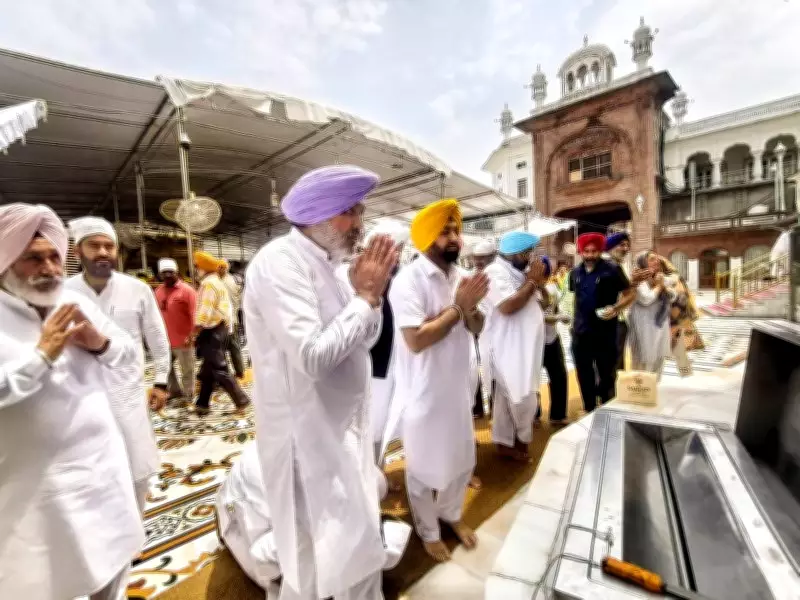
In an unprecedented move on June 29, 2026, the Akal Takht Jathedar summoned elected members of the Punjab Legislative Assembly to explain their passage of the Jaagat Jot Sri Guru Granth Sahib Satkar (Amendment) Act. This marked the first time a religious authority had called upon legislators to justify a law, challenging the constitutional principle that parliamentary proceedings are unchallengeable except by the Speaker, courts, or electorate.
Legislators Unprepared for Akal Takht Scrutiny
Jathedar Kuldeep Singh Gargaj, well-prepared for the session, treated the assembled MLAs from various parties as schoolchildren, scolding them for inadequate answers and assigning homework to be completed within a month. A striking revelation emerged: many legislators were ignorant of the provisions of the law they had passed. The incident underscores a lack of legislative diligence, with the Aam Aadmi Party (AAP) now facing pressure to field more informed and educated candidates in upcoming elections.
AAP's Shift Towards Religious Appeasement
The AAP, which once championed secularism, has increasingly pandered to religious impulses, competing with the Akali Dals and the BJP. The Punjab government's decision to obey a religious diktat marks a departure from the principle of state-church separation. Emulating the BJP's Ram temple strategy, AAP leader Arvind Kejriwal announced plans to build and repair temples, organize devotional events, and expand free pilgrimage schemes to more religious sites. This religion-driven move aims to woo Hindu minority voters in urban areas, while Chief Minister Bhagwant Mann focuses on rural voters.

Political Calculations Behind the Akal Takht Summons
Bhagwant Mann, a seasoned politician, appears to have walked into a trap set by the Shiromani Akali Dal (SAD). Sukhbir Badal, who controls the Shiromani Gurdwara Parbandhak Committee (SGPC) that appoints Akal Takht Jathedars, orchestrated the summons to put Mann on the spot. The AAP is now damned if it implements the Jathedar's list of amendments and damned if it does not. Mann has publicly ruled out changes, but may be forced to reconsider.
Missed Opportunities for Consultation
Before passing the anti-sacrilege law, the Mann government failed to consult the SGPC widely. Had the Chief Minister engaged the religious body rather than congratulating himself, opponents might not have reacted so strongly. The law, which criminalizes acts of sacrilege against the Guru Granth Sahib, was initially welcomed by ordinary Sikhs, but Sukhbir Badal, sensing a loss of Sikh votes, moved to undermine Mann's achievement. The custodial interrogation of Sukhbir's chartered accountant and a former Jathedar's statement to a Special Investigation Team further fueled tensions.
Mann's Missteps and Ongoing Crises
After being declared 'Guru Dokhi' and 'Panth Virodi,' Mann initially denied involvement in a controversial video, a claim widely accepted by the public. However, his subsequent actions—sending cops to Gurugram and making claims about a mask—undermined his credibility. Critics suggest internal sabotage or Mann's own misjudgment. As Home Minister, he has failed to resolve inherited issues like drugs, gangsters, and illegal mining. High-profile cases, including the 2015 Bargari sacrilege, Behbal Kalan and Kotkapura firing incidents, and the 2017 Maur Mandi bomb explosion that killed seven, remain unresolved.
Breaking Precedent: Chief Minister Appears Before Akal Takht
Mann's appearance before the Akal Takht broke with established norms. Former President Giani Zail Singh and five-time Chief Minister Parkash Singh Badal chose their own timings when summoned. Surjit Singh Barnala and Buta Singh sought pardon only after leaving constitutional positions. Mann's compliance may have been politically compelled, but it sets a precedent for religious interference in governance.

Electoral Implications: Winners and Losers
The religious turn in Punjab politics could benefit the BJP and Congress. Kejriwal's courting of urban Hindu voters may backfire if Hindus prefer the BJP's established Hindutva brand over AAP's B-team image. Sukhbir Badal's identity politics risks driving Sikh voters to Amritpal Singh's Akali Dal Waris Punjab De, which despite organizational weaknesses could emerge as a dark horse. The Congress, undergoing a leadership reshuffle, may become the first choice for secular voters, who remain a significant bloc.
Conclusion: A High-Stakes Gamble
The AAP's religion-driven strategy is a gamble in a largely secular state. As the drama unfolds, the biggest gainers may be the BJP and Congress, while the AAP and Akali Dal face uncertain futures. The coming elections will reveal whether religious appeasement or secular values prevail in Punjab.