

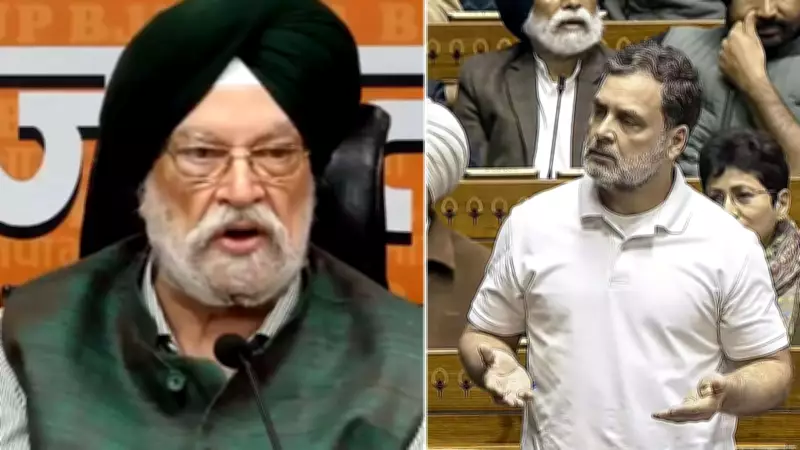
Entertainment Over Evidence? Hardeep Puri Condemns Rahul Gandhi's Epstein Files Remarks
The ongoing Epstein Files controversy has now firmly entered the political discourse of the Indian Parliament, sparking a fiery exchange between senior leaders. Congress leader Rahul Gandhi invoked the infamous documents during a parliamentary speech, making references that targeted several political figures, including Union Minister Hardeep Singh Puri.
Puri's Forceful Rebuttal and Clarification
Responding with sharp criticism, Hardeep Singh Puri categorically dismissed the insinuations as baseless political theatrics. He provided a detailed clarification regarding his own name appearing in the documents, emphasizing that any interactions with Jeffrey Epstein occurred strictly in official and professional capacities.
"My contact with Epstein was minimal and entirely within the framework of official delegations and multilateral engagements," Puri stated. "The records show a single email exchange and merely three or four references across millions of emails from that period, all pertaining to professional duties."

The Minister stressed that these interactions were completely unrelated to the criminal allegations surrounding Epstein and his associates. He urged critics and the public to examine the actual documentary evidence rather than relying on sensationalized claims.
Accusations of Sensationalism and Political Motives
Turning the tables on the accuser, Puri launched a direct attack on Rahul Gandhi's methodology. He accused the Congress leader of engaging in what he termed "political buffoonery" by attempting to link unrelated names to a global scandal for mere sensational effect.
"This attempt to drag respectable names into a sordid affair reflects a poverty of substantive political argument," Puri asserted. "It is designed for entertainment value, not evidentiary scrutiny, and shows a preference for theatrics over serious parliamentary discourse."
Escalating Tensions in Parliament
This heated exchange has significantly intensified the already strained relations between the ruling Bharatiya Janata Party (BJP) and the opposition Congress party. The episode has injected fresh volatility into the current parliamentary session, diverting attention from legislative agendas to personal and political accusations.
Analysts suggest that using international scandals like the Epstein Files in domestic political rhetoric represents a new and aggressive turn in Indian political confrontations. The incident underscores the deepening polarization and the strategic use of external controversies to score domestic political points.
As the session continues, observers are watching to see if this confrontation leads to further disruptions or if it prompts a return to more policy-focused debates. The clash over the Epstein Files has undoubtedly raised the political temperature in New Delhi, setting the stage for more contentious interactions in the days ahead.






